Custom Food Packaging for Restaurants, Takeaways & Foodservice Brands
Custom food packaging brings together the different boxes, trays, wrapping papers, bags and foodservice packaging products a business needs to prepare, present and carry food while keeping its brand visible.
For restaurants, cafés, bakeries, takeaway businesses, fast-food brands and delivery kitchens, the right packaging is rarely just one product. A complete order may require a food box, greaseproof wrapping, a paper tray, a takeaway bag, napkins or other complementary packaging depending on what is being served.
Packonic's custom printed food packaging range includes multiple packaging formats for different menu items and service models, with options for logo printing, White and Kraft materials, different minimum order quantities and both standard and faster delivery routes on selected products.
Also searched as branded food packaging, takeaway food packaging, custom takeaway packaging, restaurant food packaging or food packaging with logo, this category acts as the main starting point for businesses building a complete branded food packaging system.
What Is Custom Food Packaging?
Custom food packaging is foodservice packaging printed or customised with a business's logo, colours or brand artwork. It can include rigid boxes, open trays, greaseproof wrapping papers, paper bags, food pouches and specialised packaging for products such as burgers, pizza, fries, desserts and doner kebab.
The purpose is not only branding. Different packaging formats solve different operational needs:
- Food boxes hold and contain meals.
- Food trays provide an open serving format.
- Greaseproof paper wraps or lines food.
- Food pouches and bags provide lighter handheld packaging.
- Pizza and burger packaging match specialist food shapes and portions.
- Paper carrier bags hold the complete takeaway order.
- Napkins and wet wipes support the final customer experience.
The best result comes from choosing each layer according to the food rather than trying to use one generic package for the entire menu.
Which Type of Custom Food Packaging Should You Choose?
The correct packaging starts with one question: how will the food be served and eaten?
A burger delivered by courier requires a different packaging system from loaded fries eaten immediately at a food court, while bakery products and pizza require their own formats.
Use the following decision logic as a starting point:
- Closed meal or takeaway portion: choose a food box.
- Open serving or immediate consumption: consider a food tray.
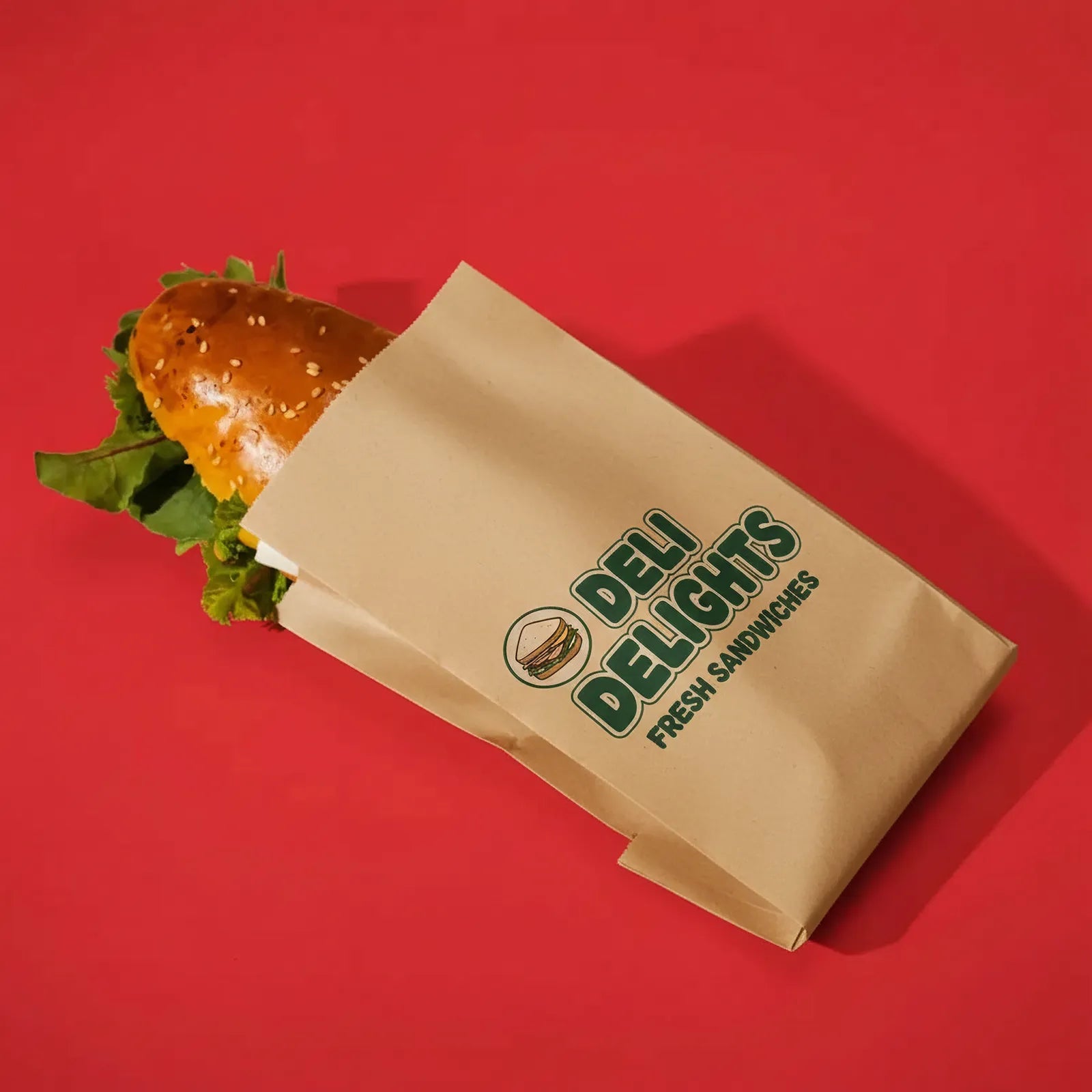
- Burger or sandwich wrapping: use greaseproof wrapping paper or a specialist food bag.
- Pizza: choose a dedicated pizza box or pizza slice tray.
- Burger meal or combo: use a burger or meal box with suitable internal space.
- Fries or side dishes: use a dedicated fry box, tray or pouch.
- Doner or kebab: choose between a formed bag/pocket and flat wrapping paper depending on service style.
- Dessert or bakery product: choose a box that matches the product dimensions and presentation.
- Complete takeaway order: combine the individual food packaging with an outer paper carrier bag.
Custom Food Boxes for Meals, Takeaway & Delivery
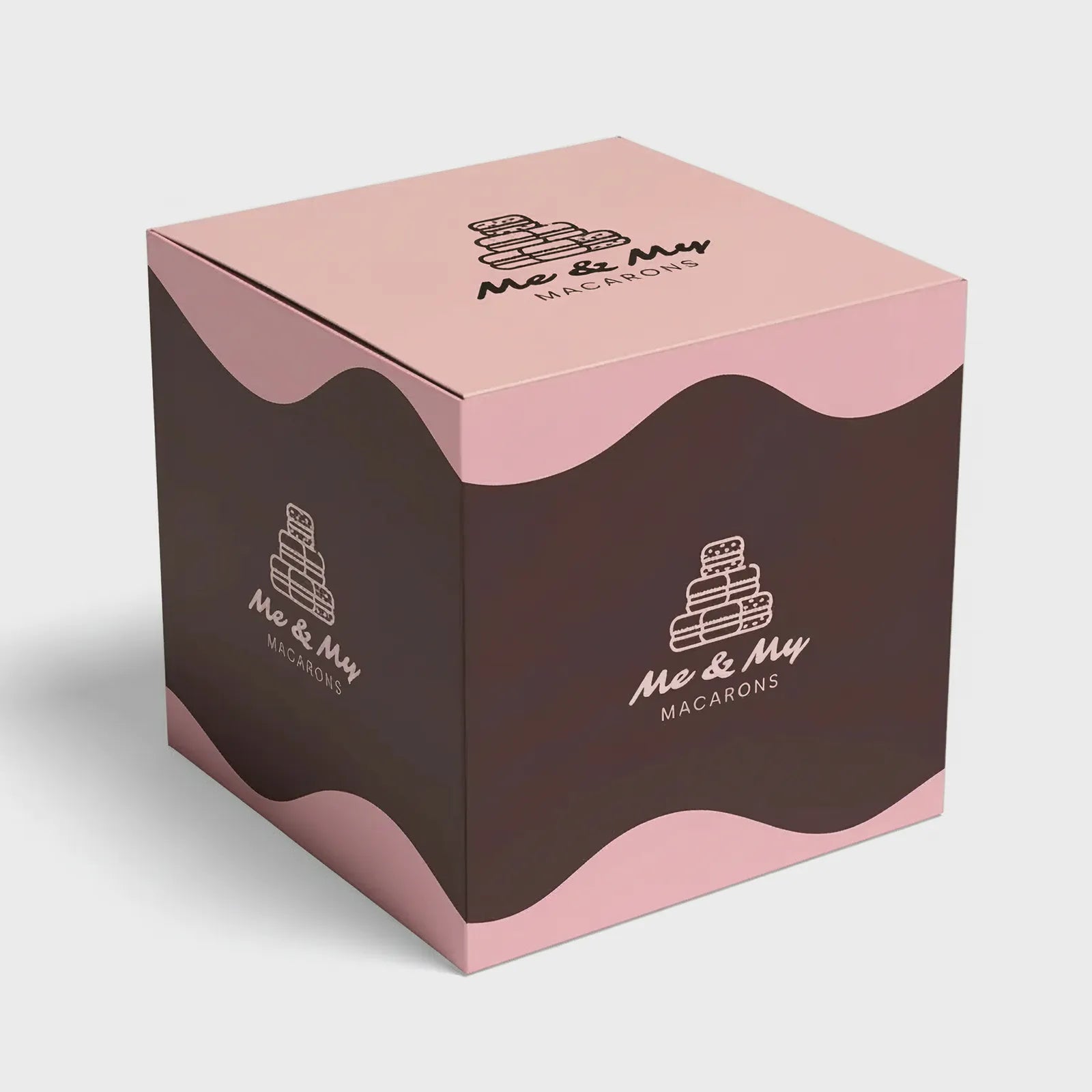
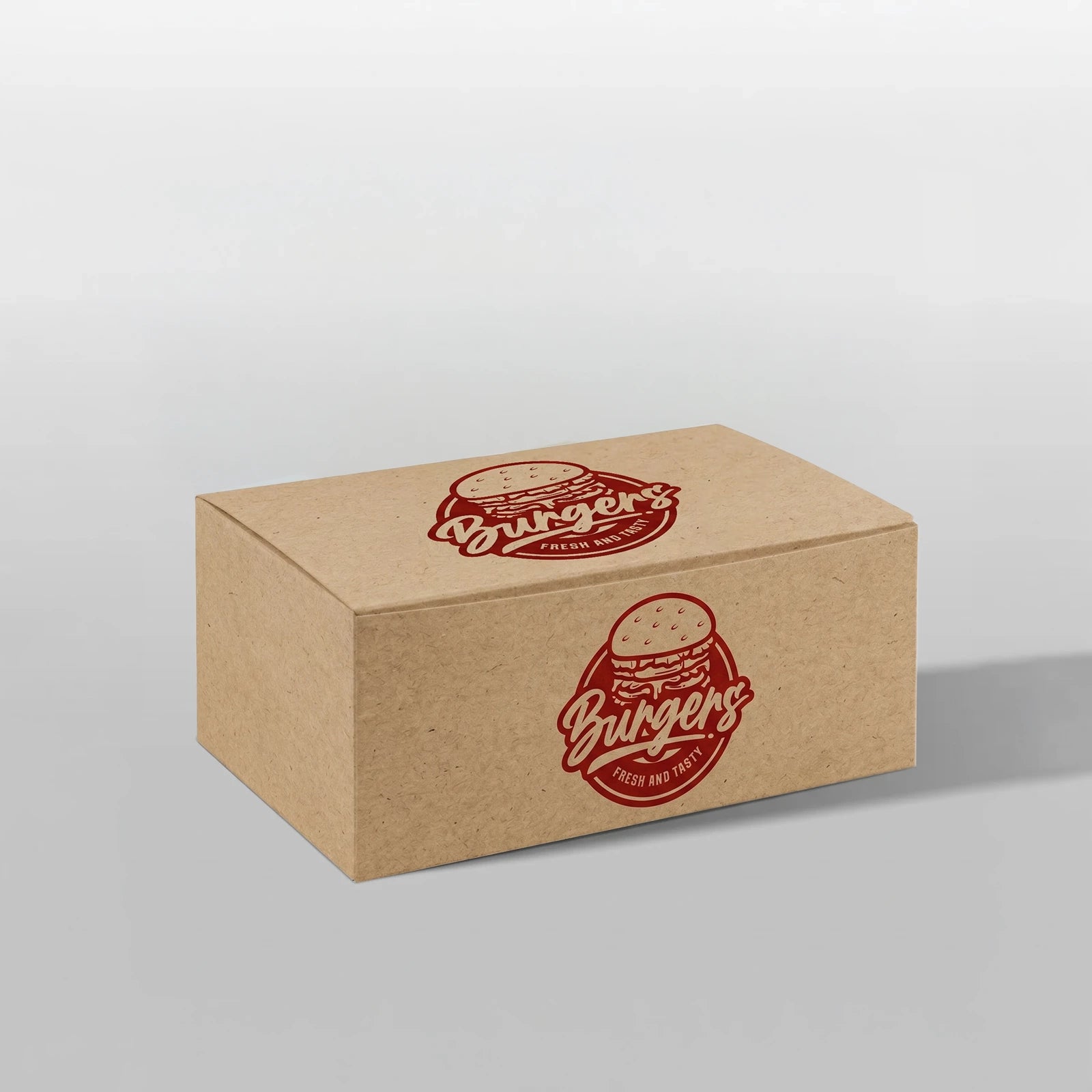
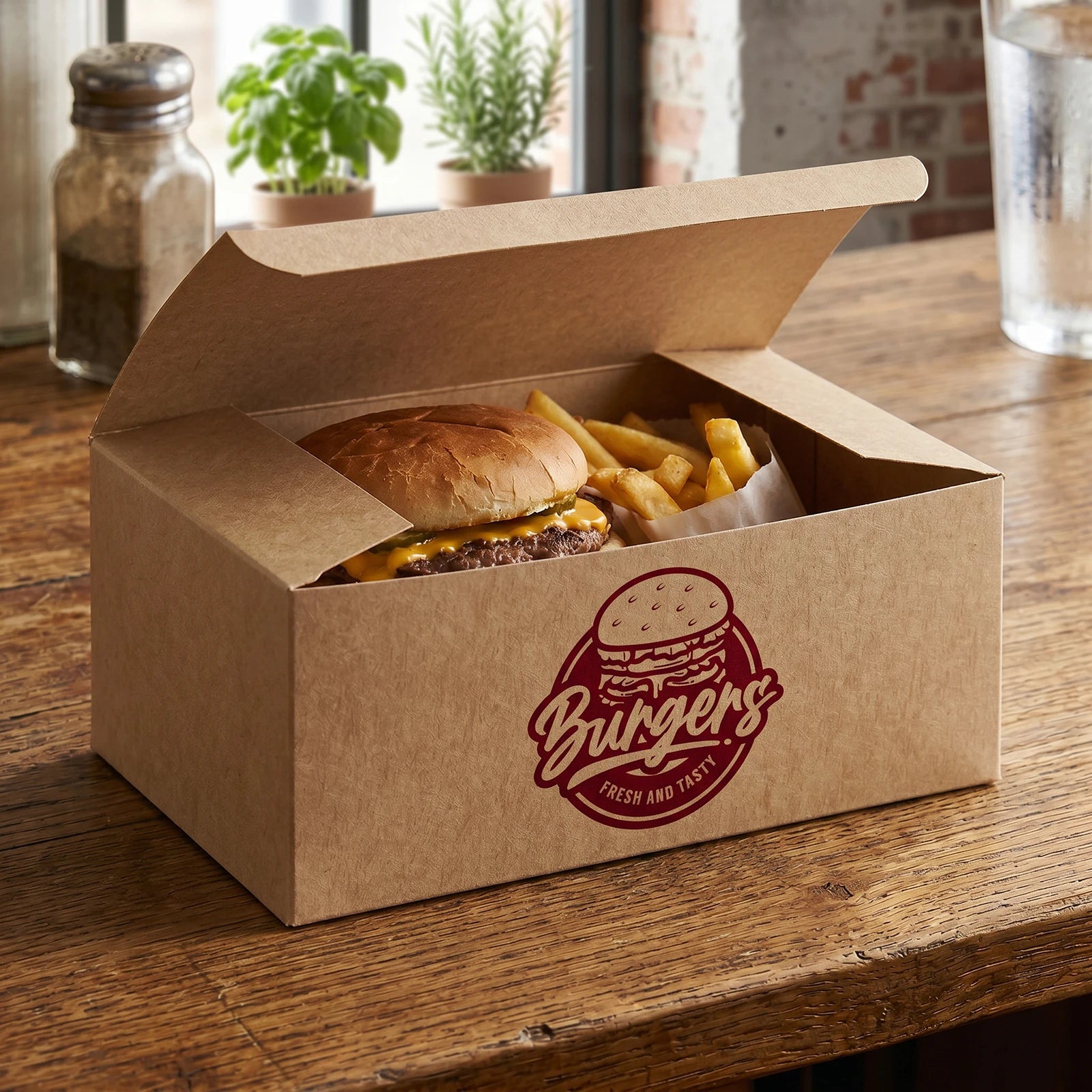
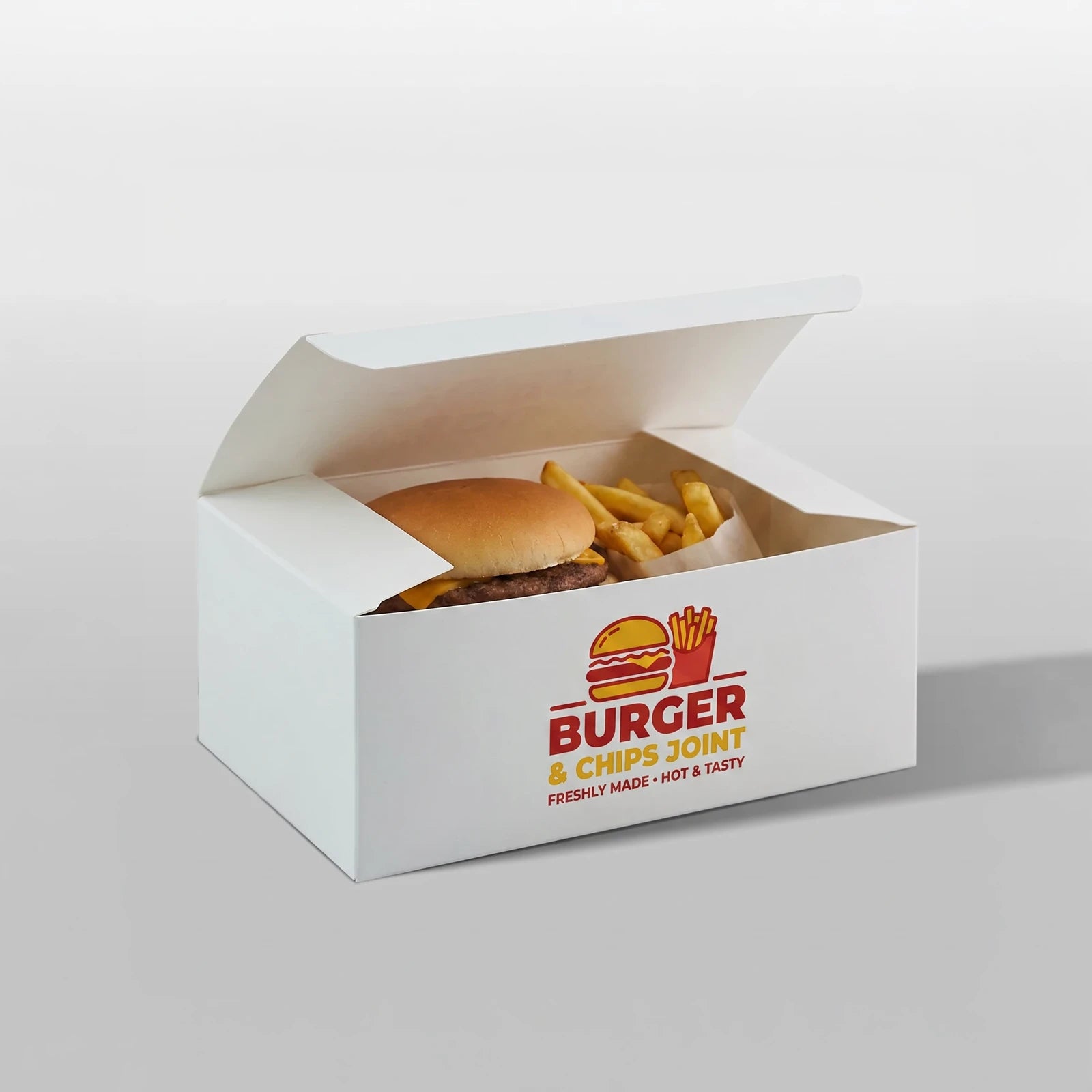
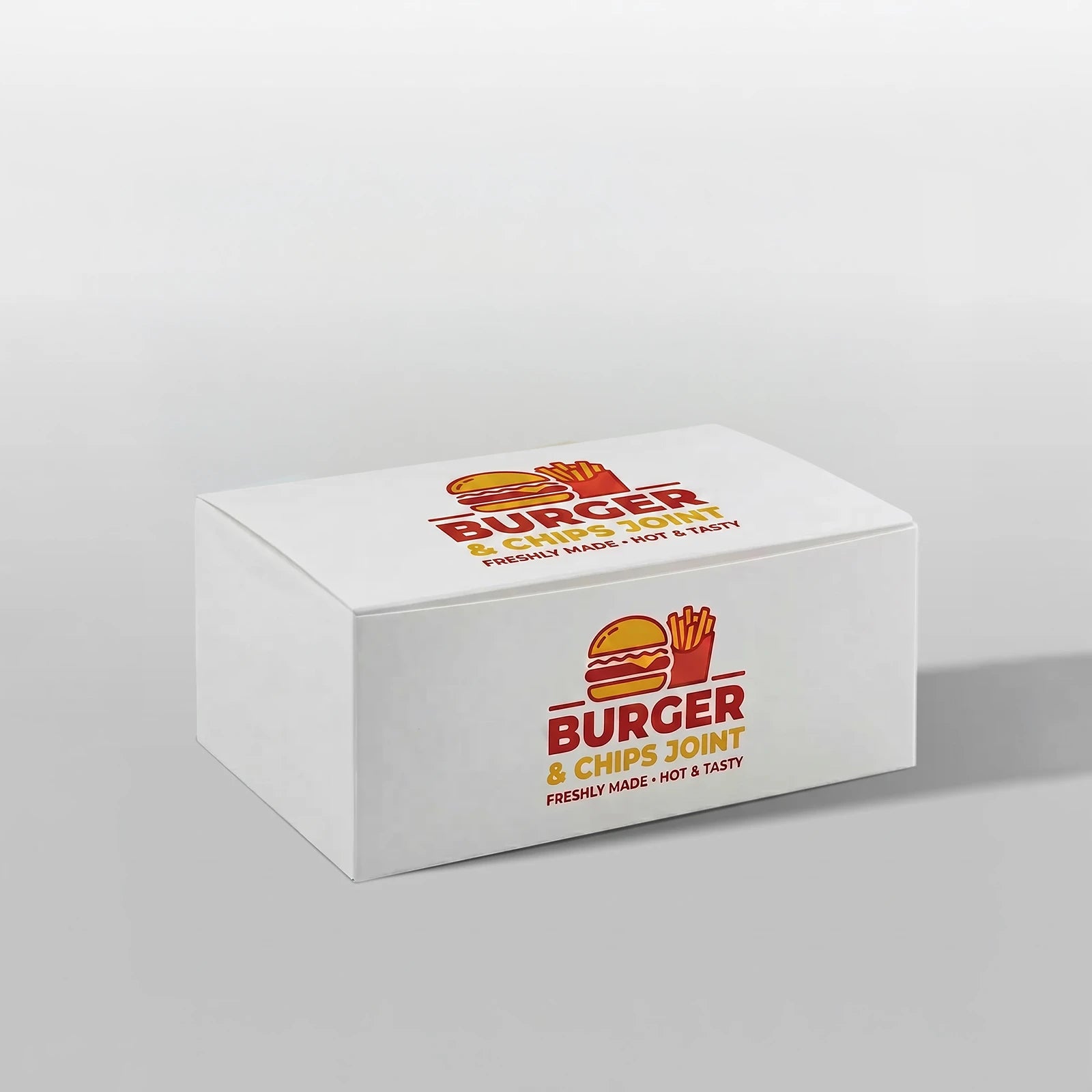
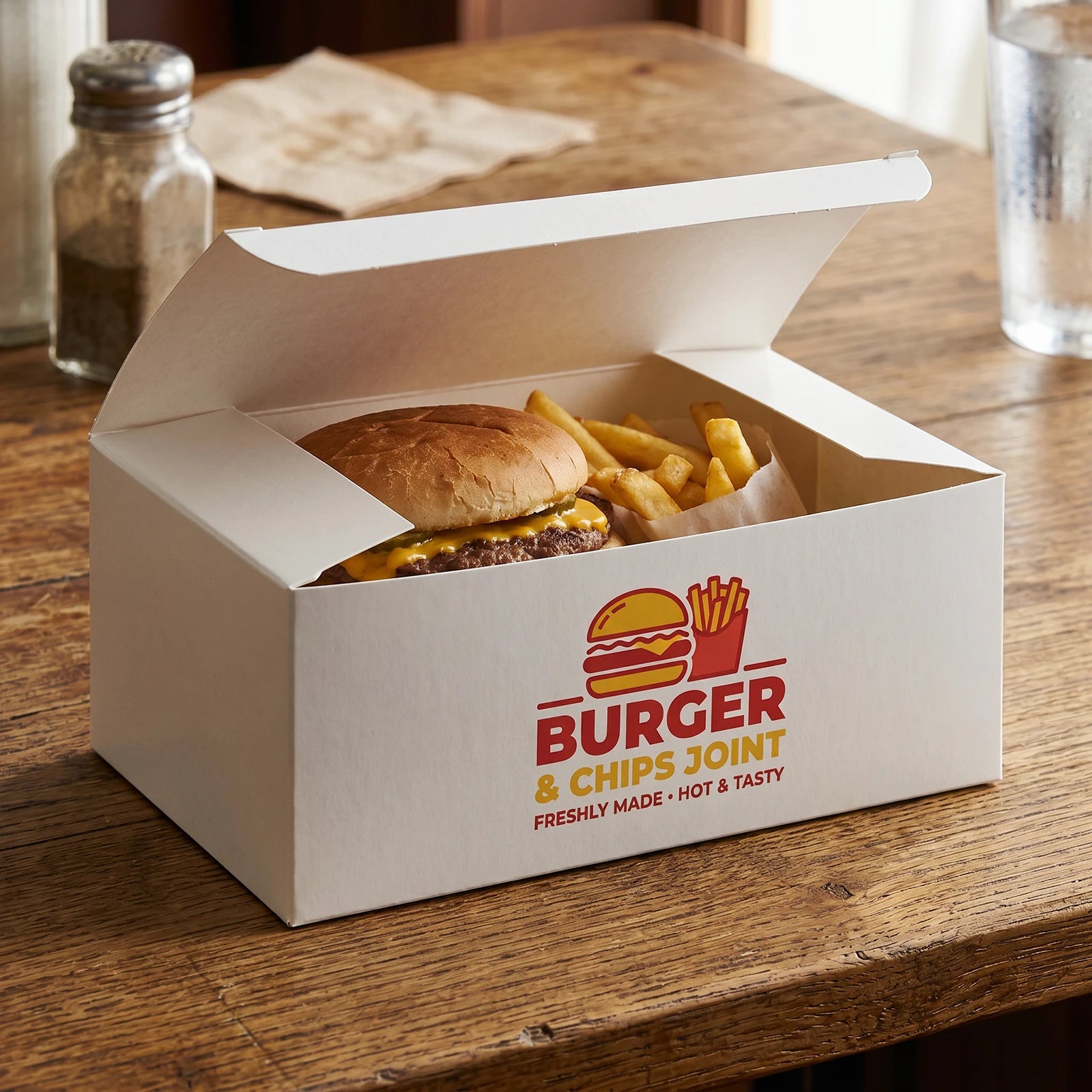
Custom food boxes are one of the main structural formats within the wider food packaging range. They are suitable when food needs to be enclosed rather than simply wrapped or served in an open tray.
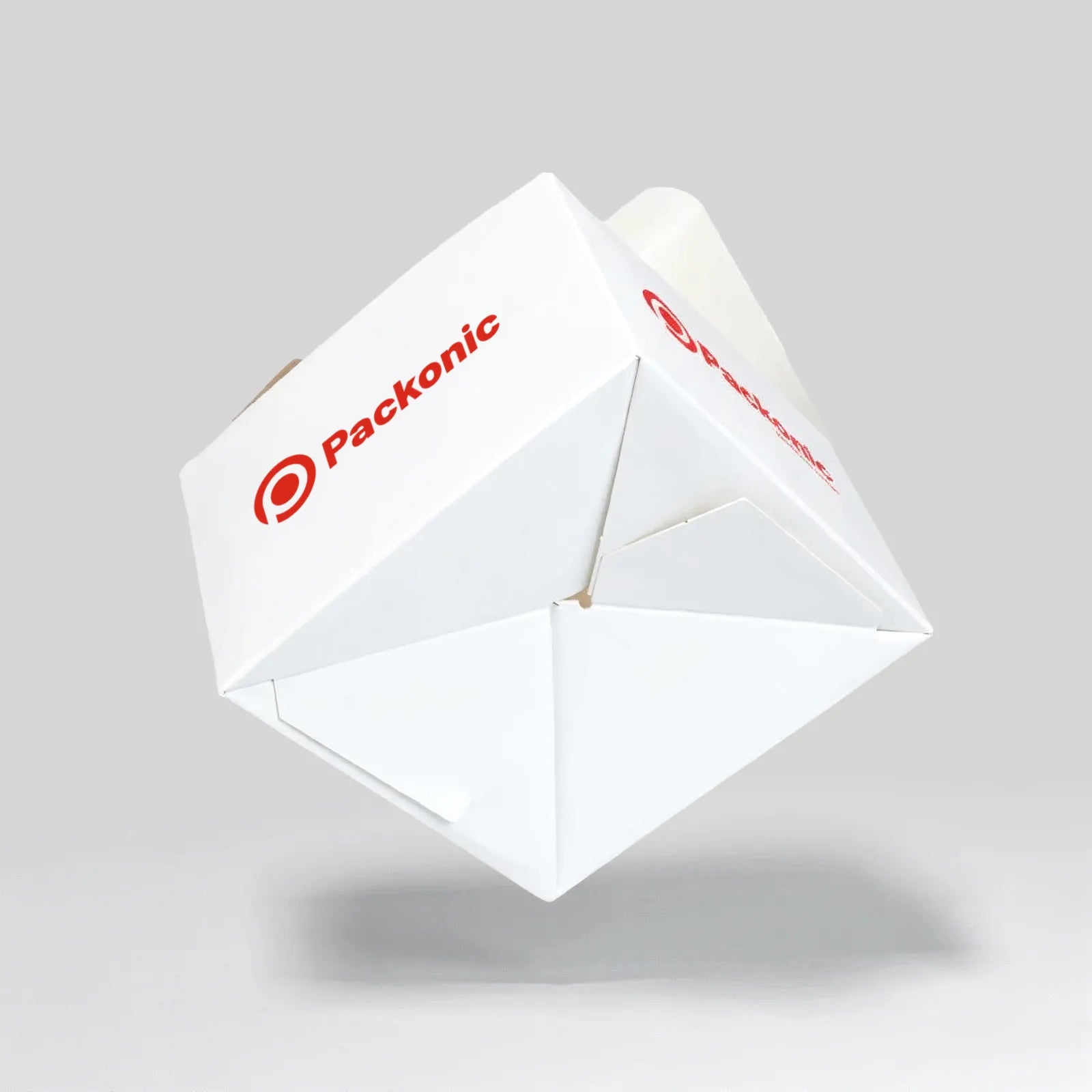
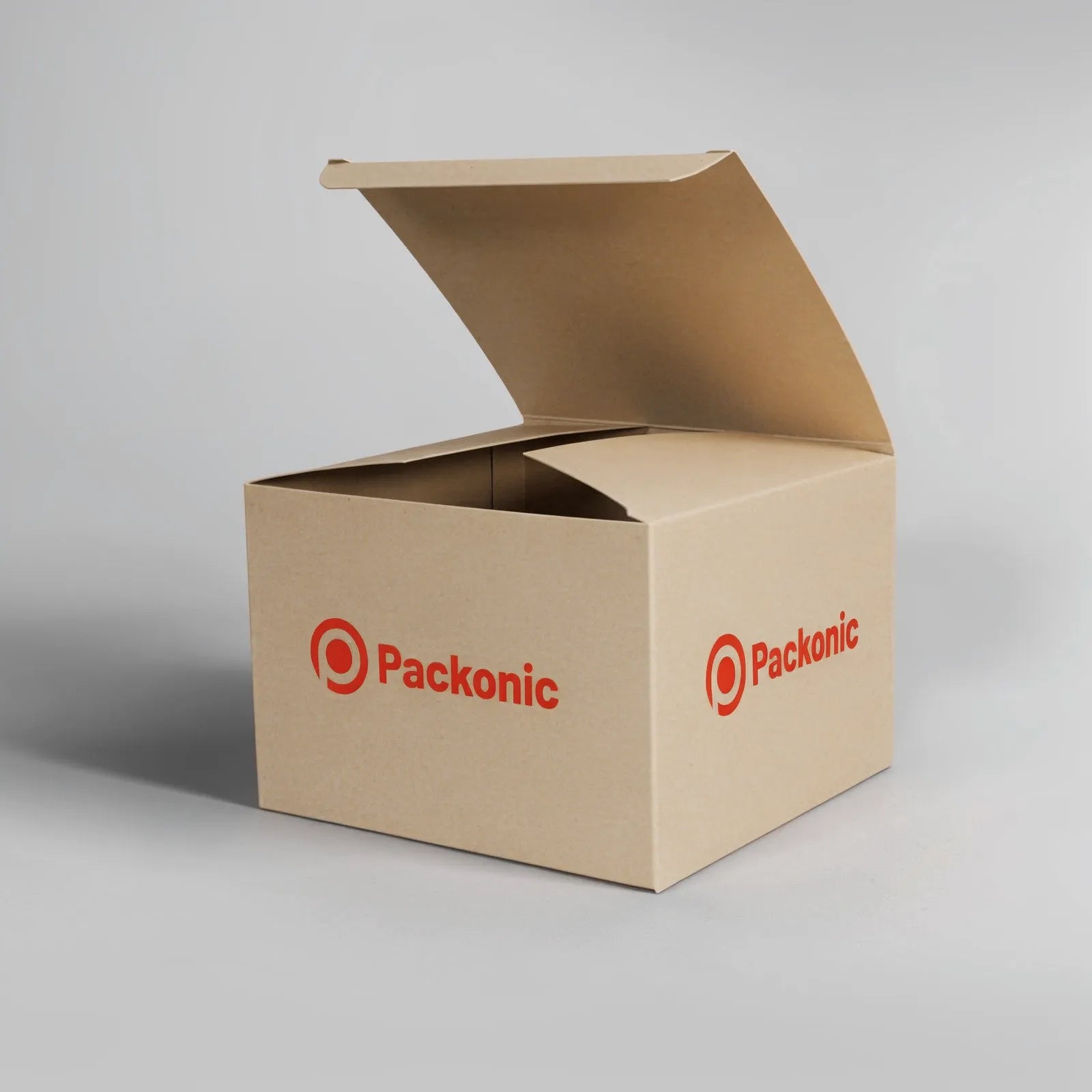
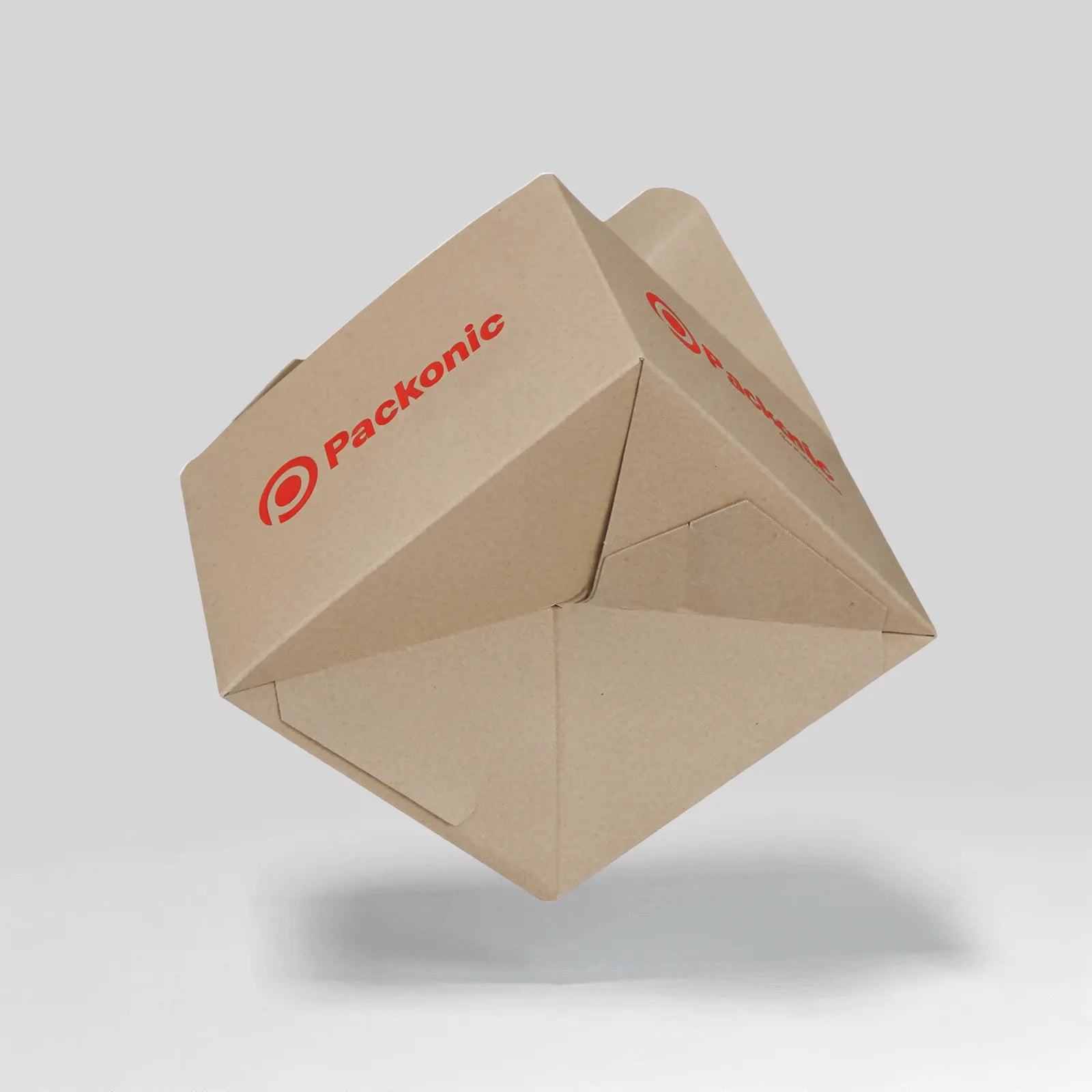
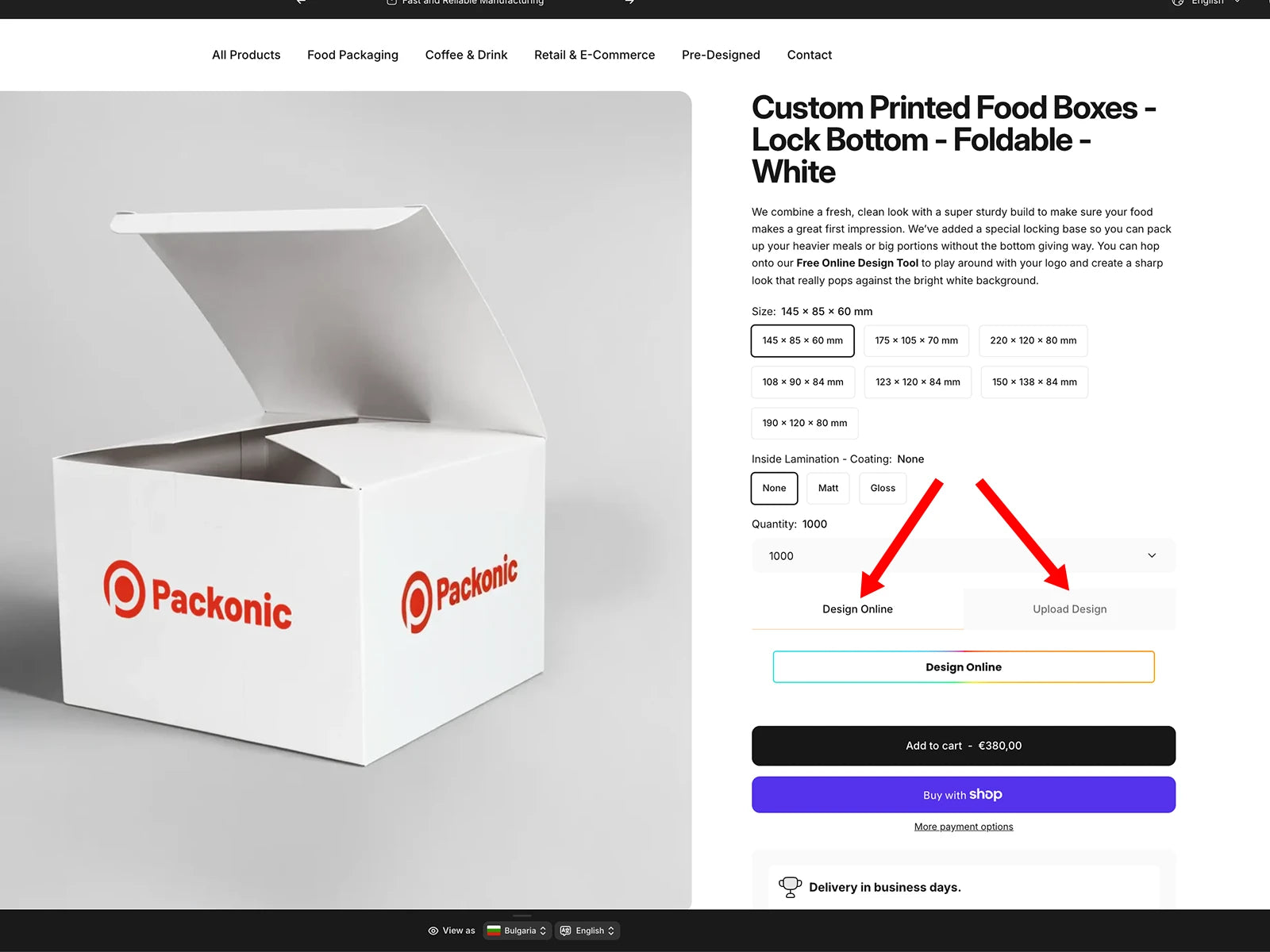
Packonic's current range includes different structures such as Easy Assembly and Lock Bottom boxes in White and Kraft.
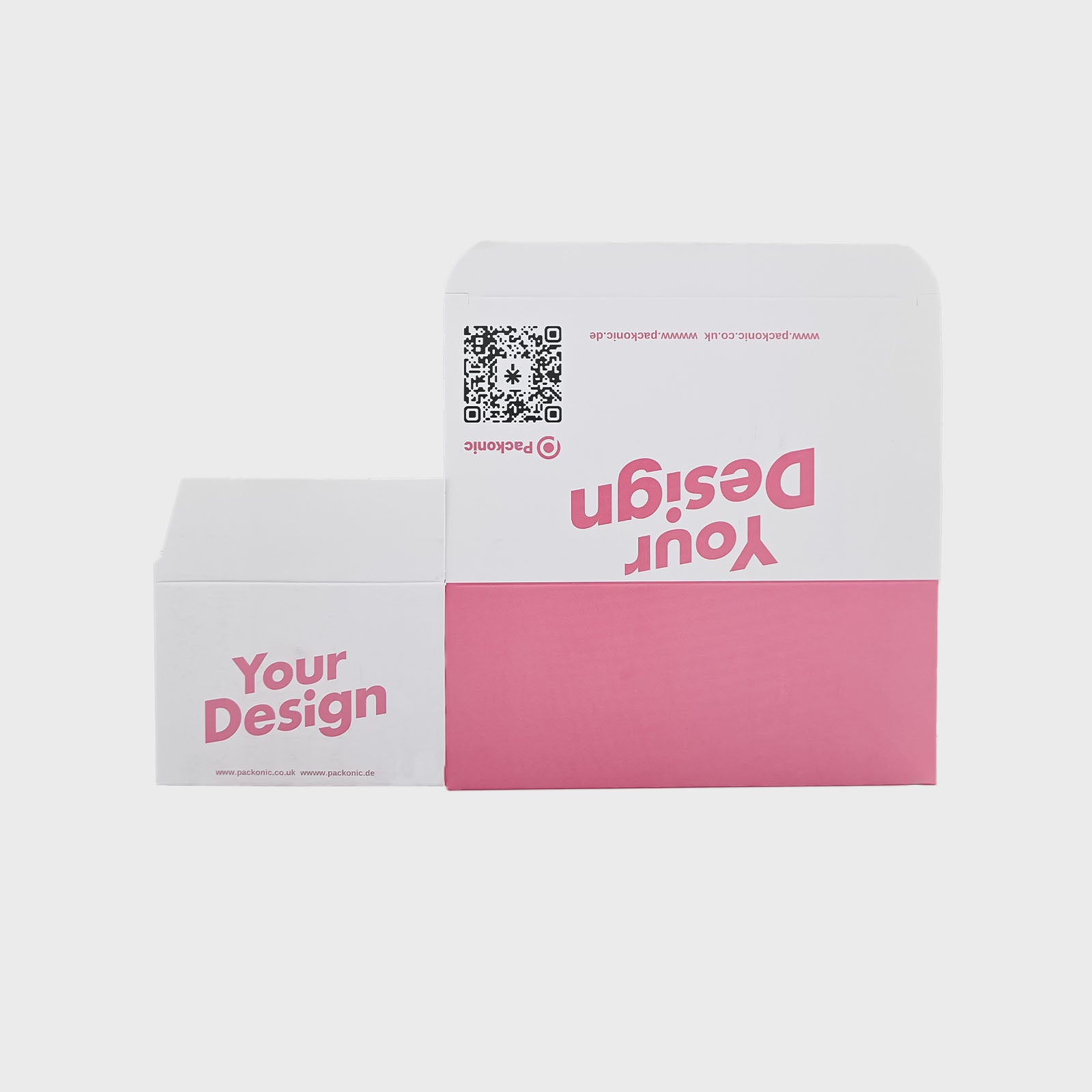
Selected Easy Assembly custom printed food boxes start from 500 pieces and use 300 GSM paper or Kraft paper with offset printing.
These can be useful for restaurants and takeaway businesses that store packaging flat and assemble boxes throughout service.
Lock Bottom food boxes use a more structured interlocking base and can be considered where the meal benefits from a firmer bottom once the box is formed.
The dedicated Custom Food Boxes category should be used when the primary buying intent is specifically a box or meal container; this Food Packaging page remains the broader hub across all foodservice packaging formats.
Paper Food Trays for Street Food & Open Serving
Custom printed food trays provide an alternative when food does not need to be completely enclosed.
They can work particularly well for:
- street food,
- loaded fries,
- snacks,
- fast food,
- food courts,
- festivals,
- events,
- and food intended for immediate consumption.
Selected Packonic Easy Assembly paper food trays in White and Kraft currently start from 500 pieces. Verified key products use 300 GSM paper or Kraft paper with offset printing.
The choice between a tray and a box should therefore depend on service style. If food needs protection during longer transport, a closed box may be more suitable. If the product is eaten immediately and visibility is important, an open tray can be more practical.
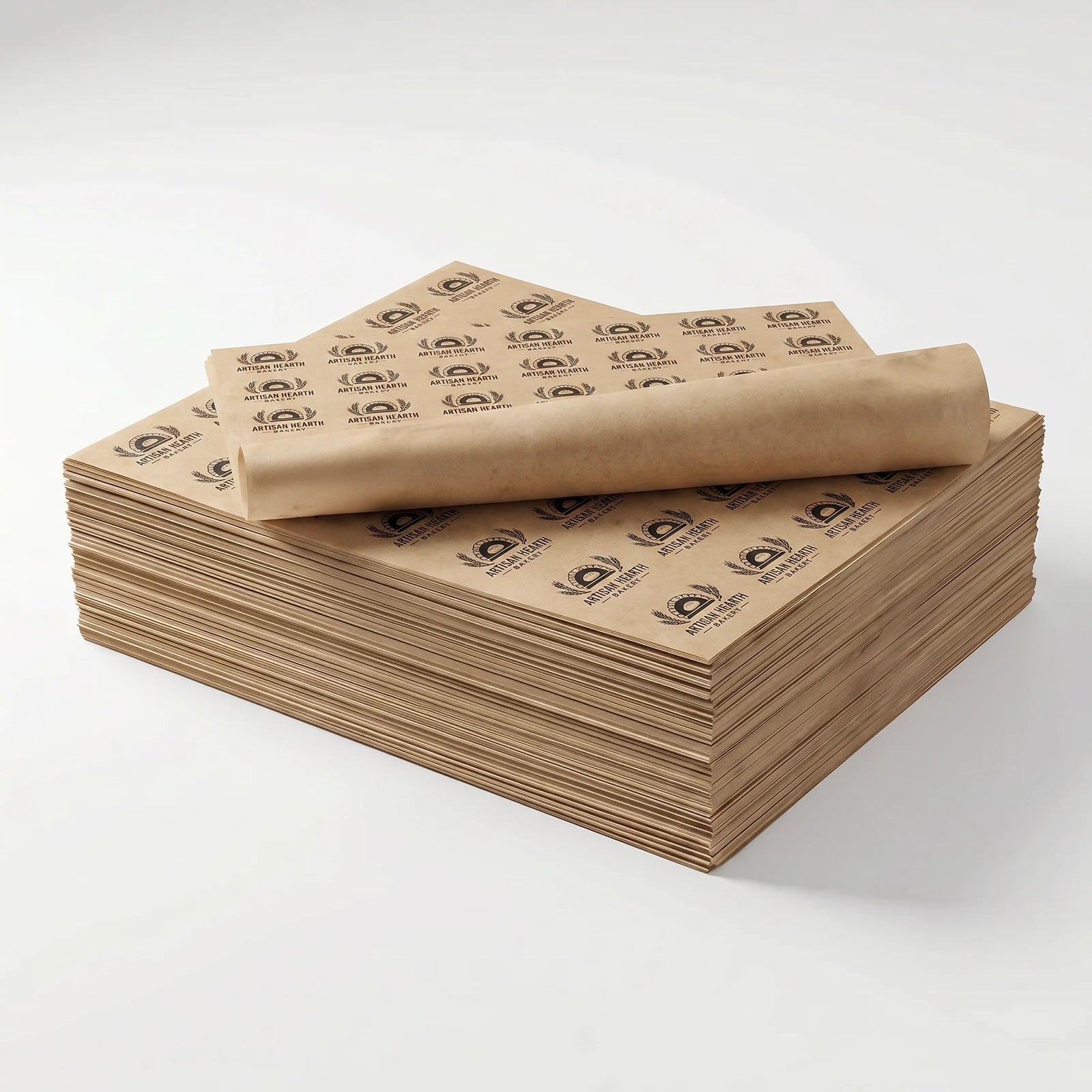
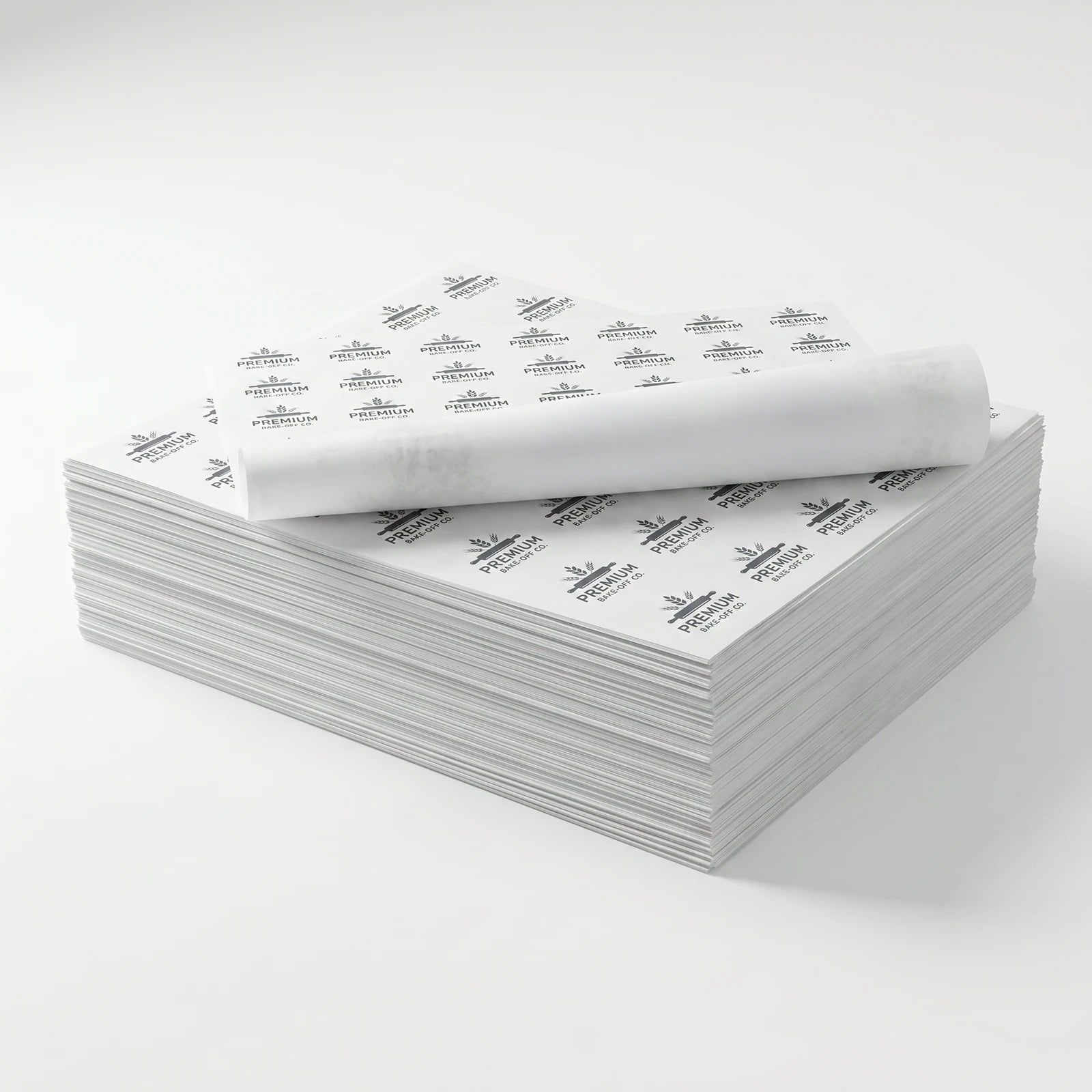
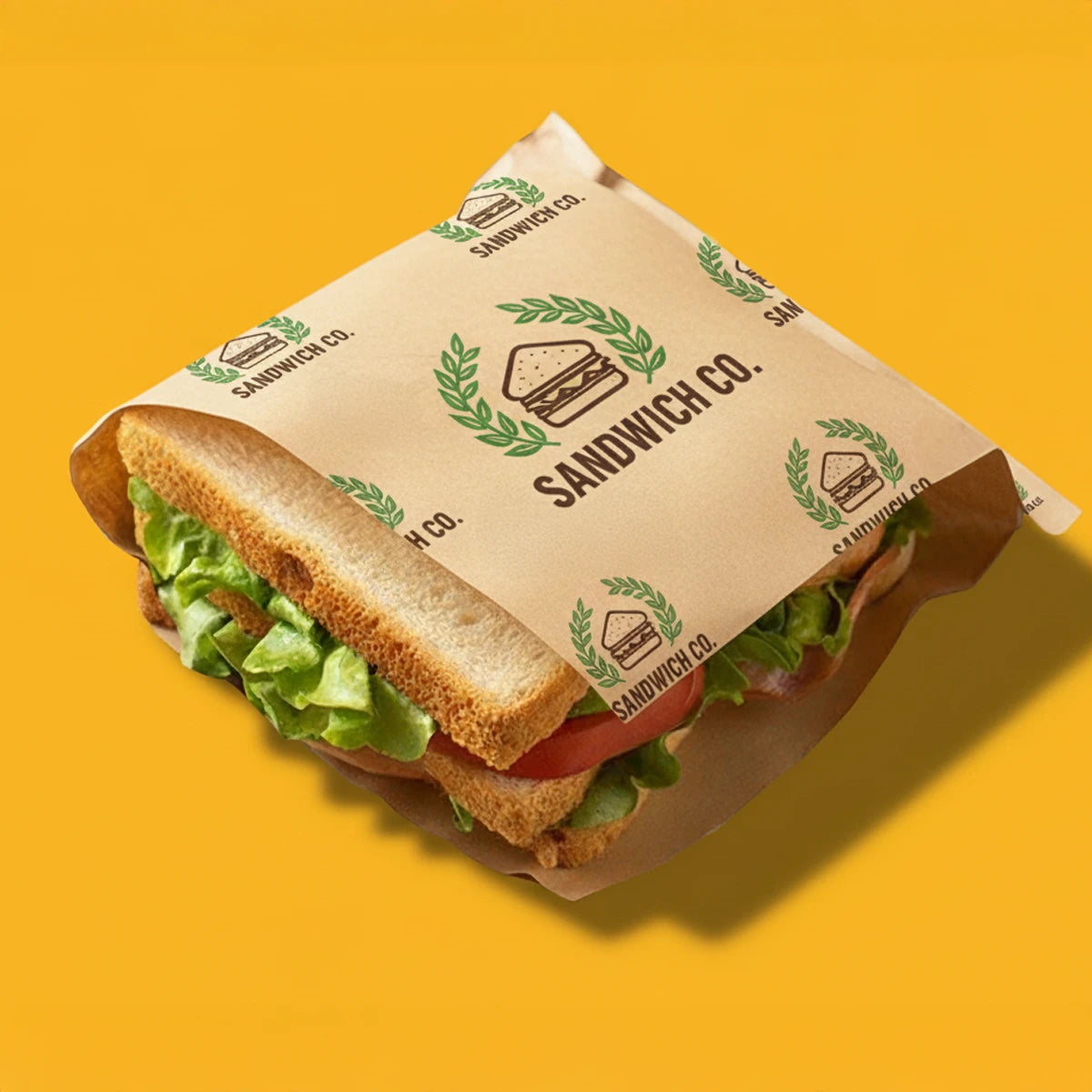
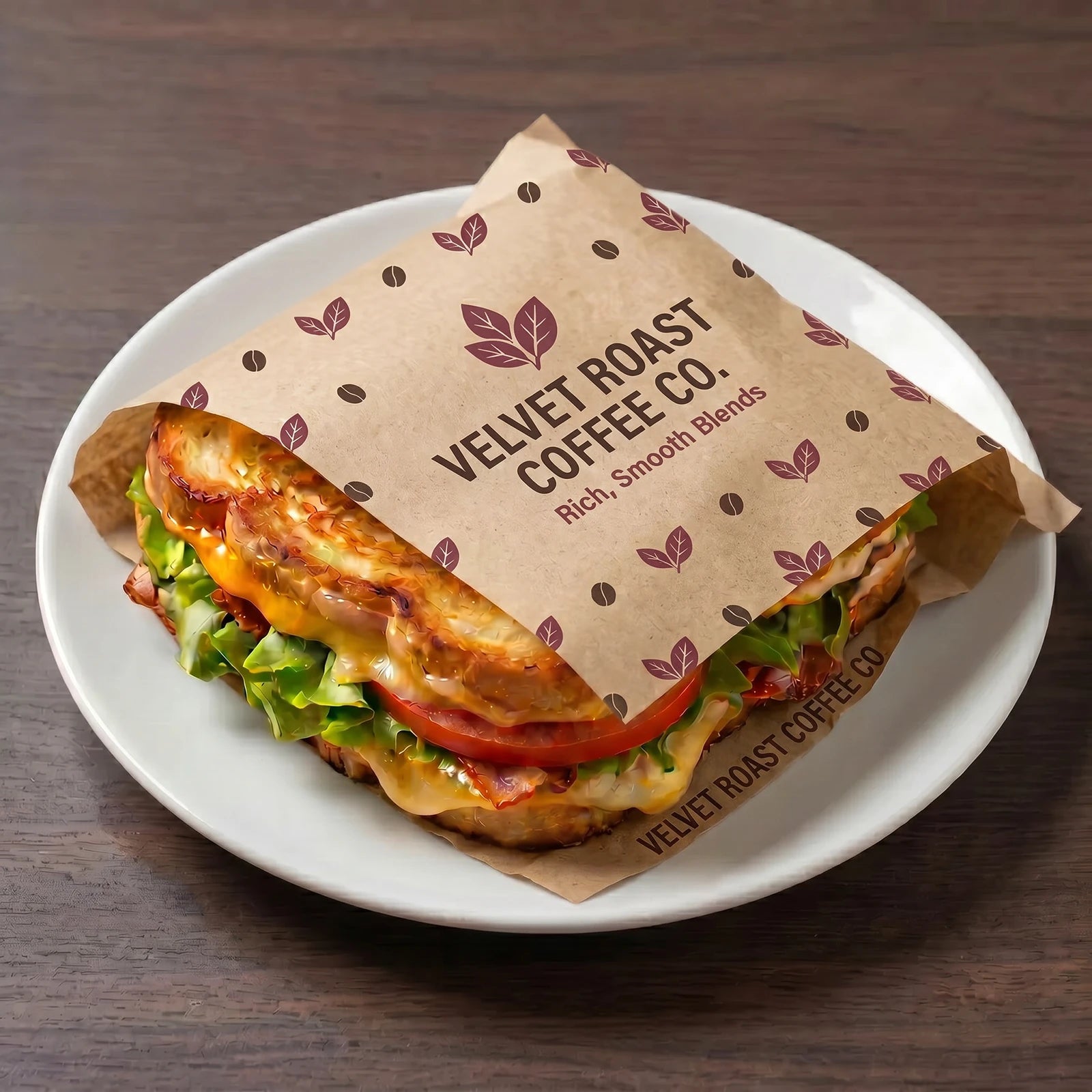
Custom Printed Greaseproof Paper for Wrapping & Lining
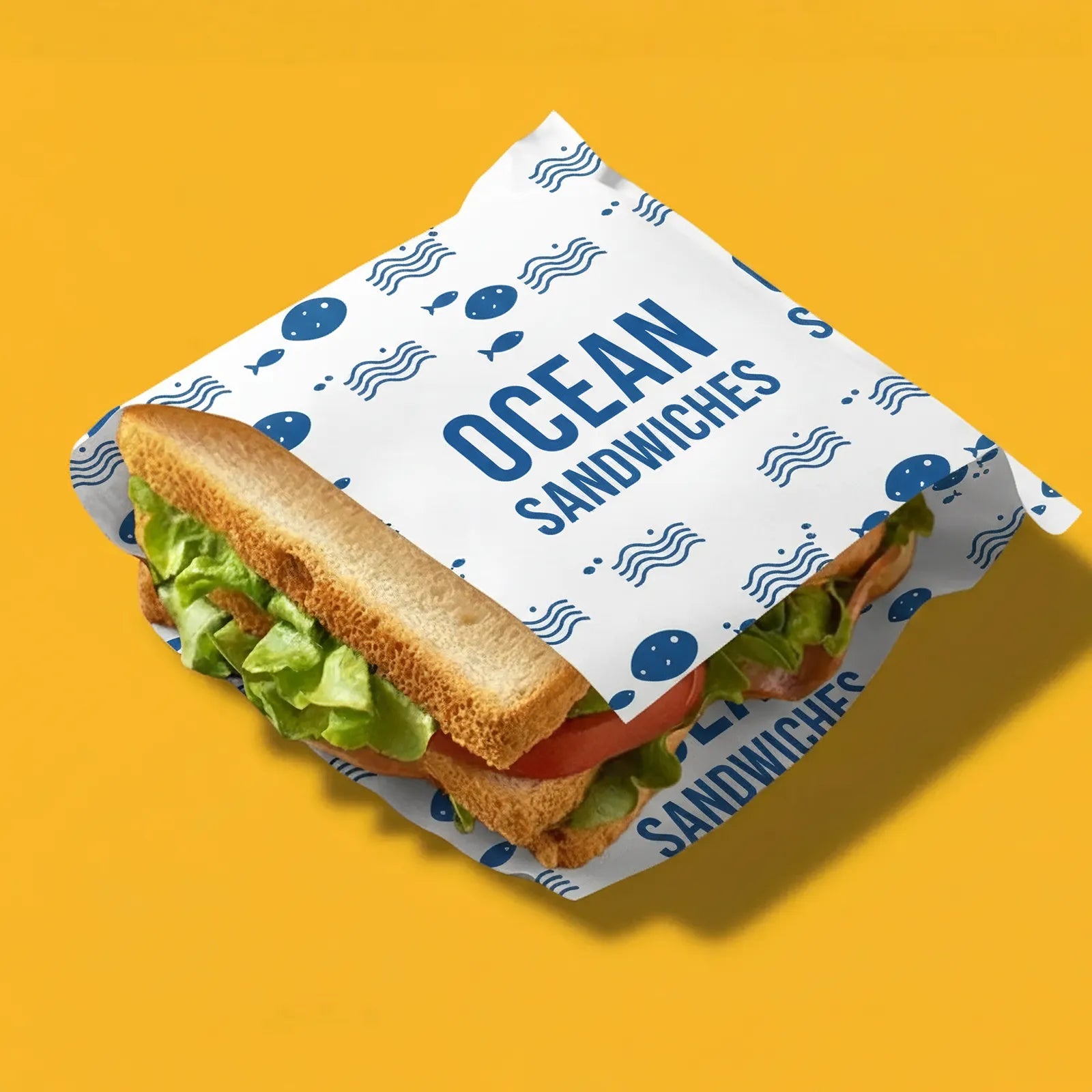
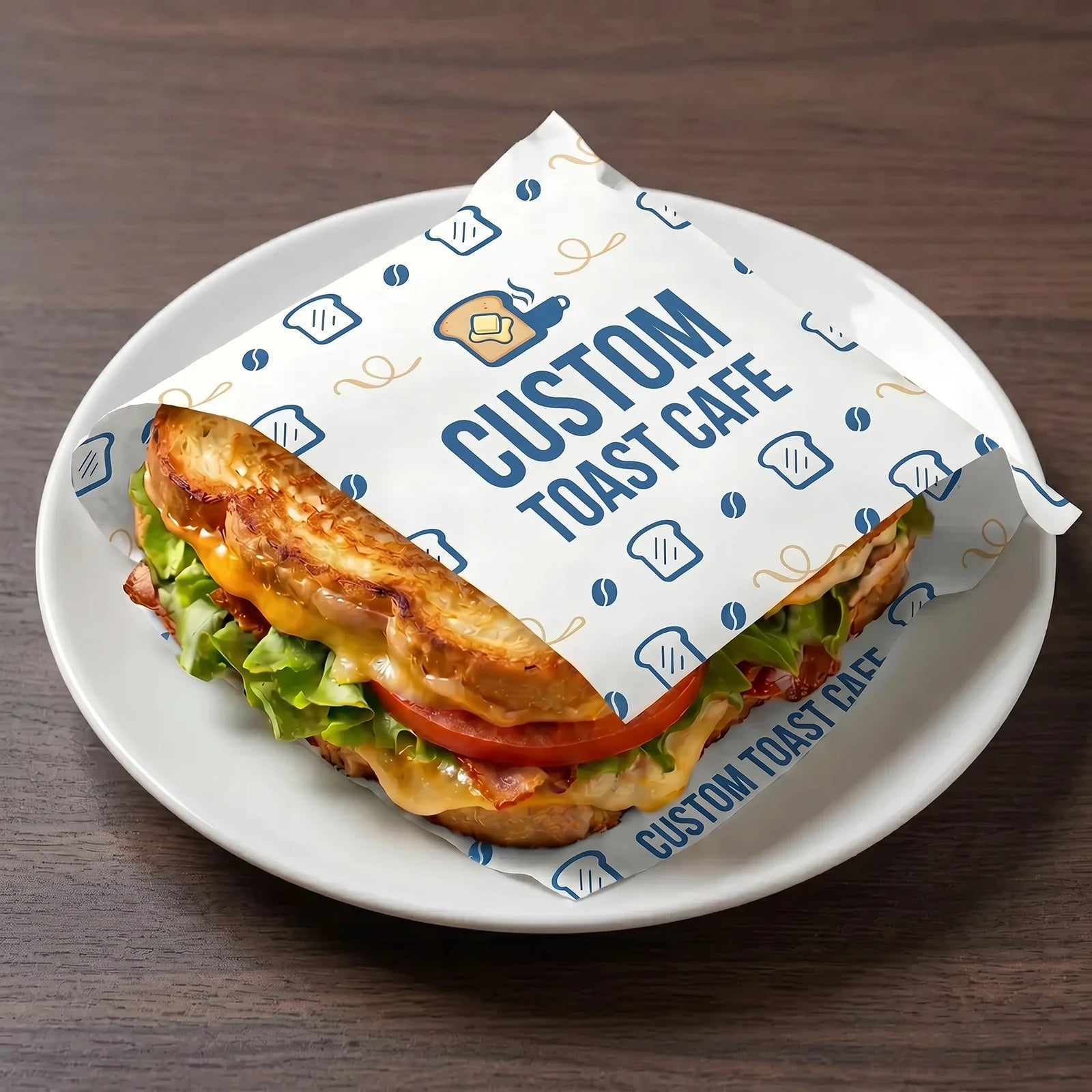
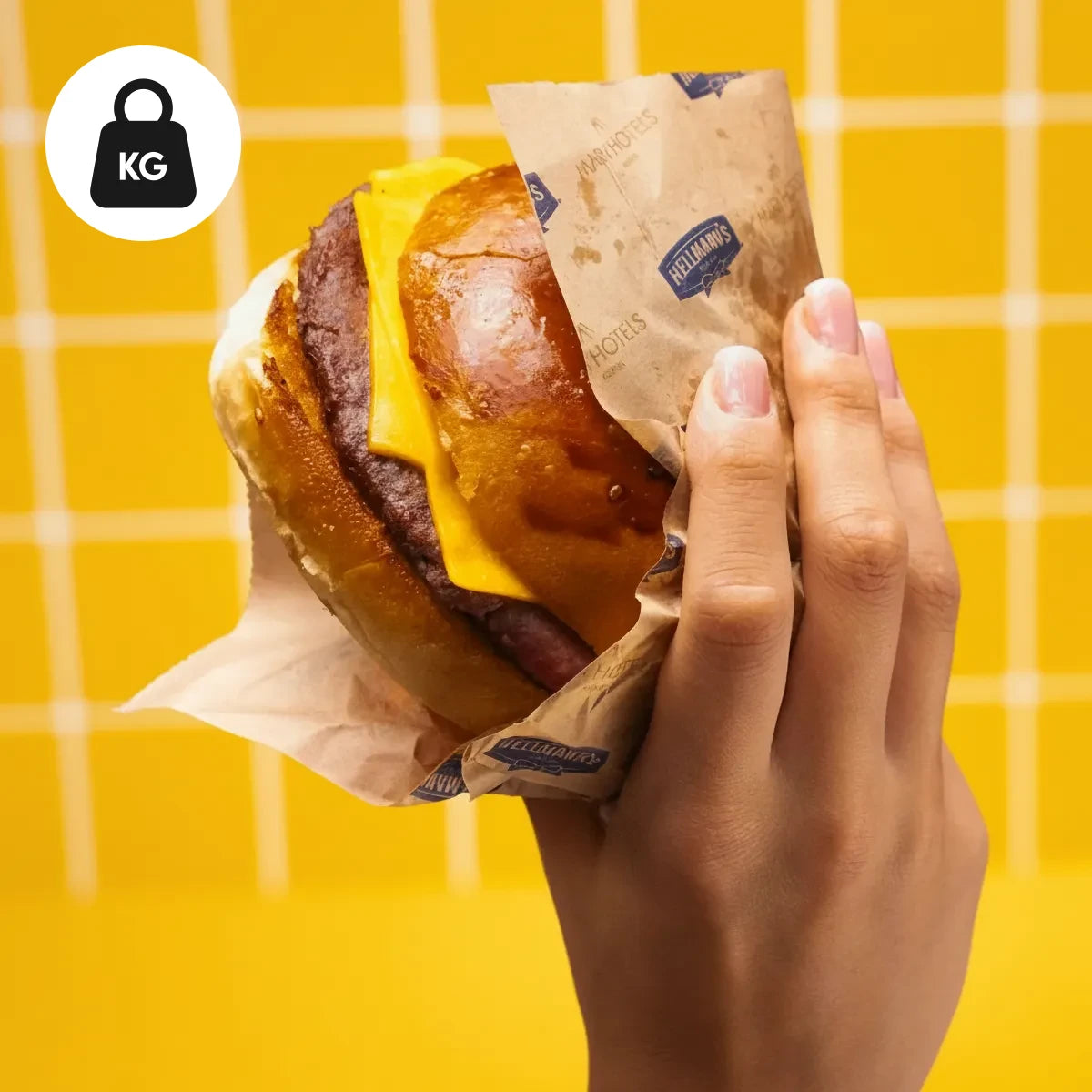
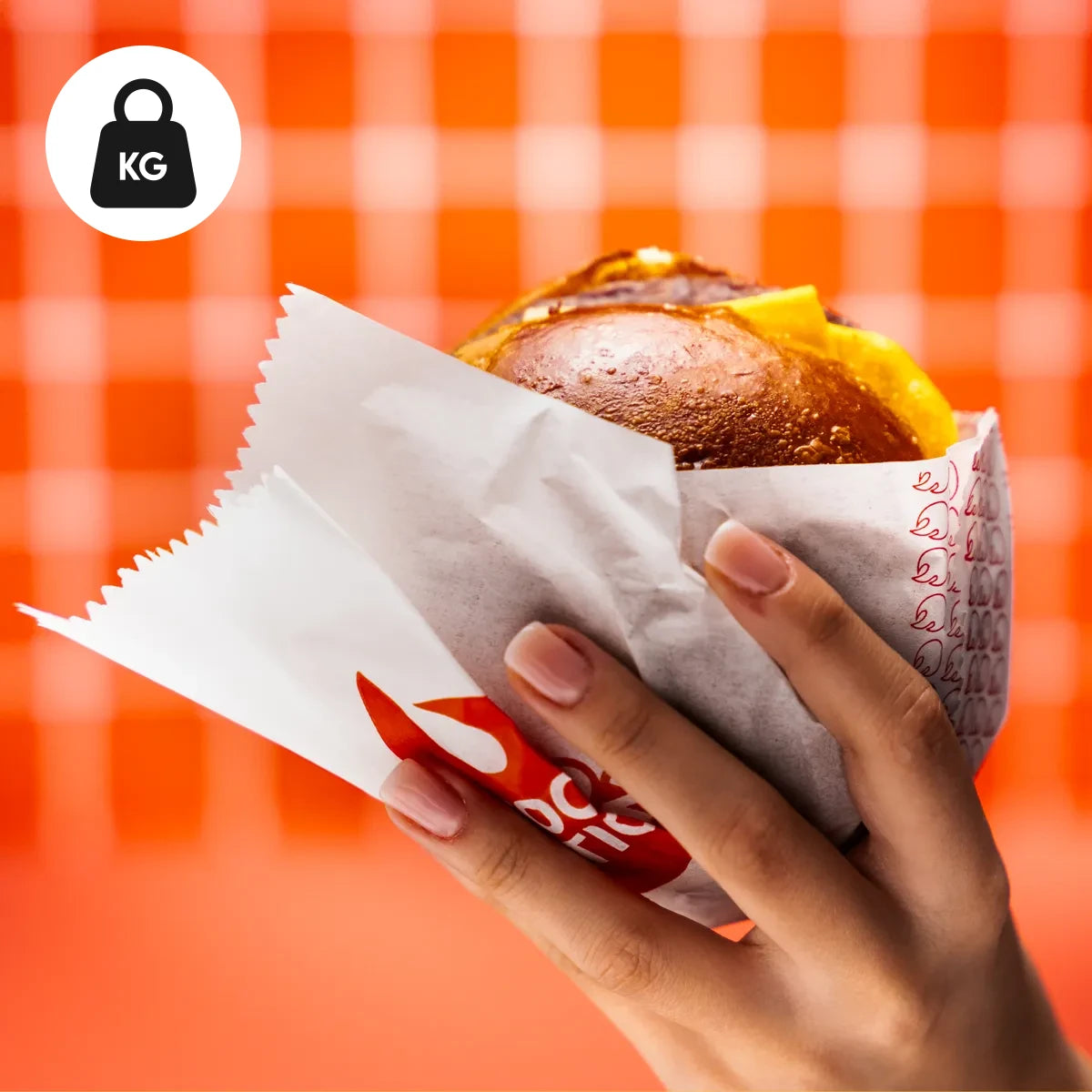
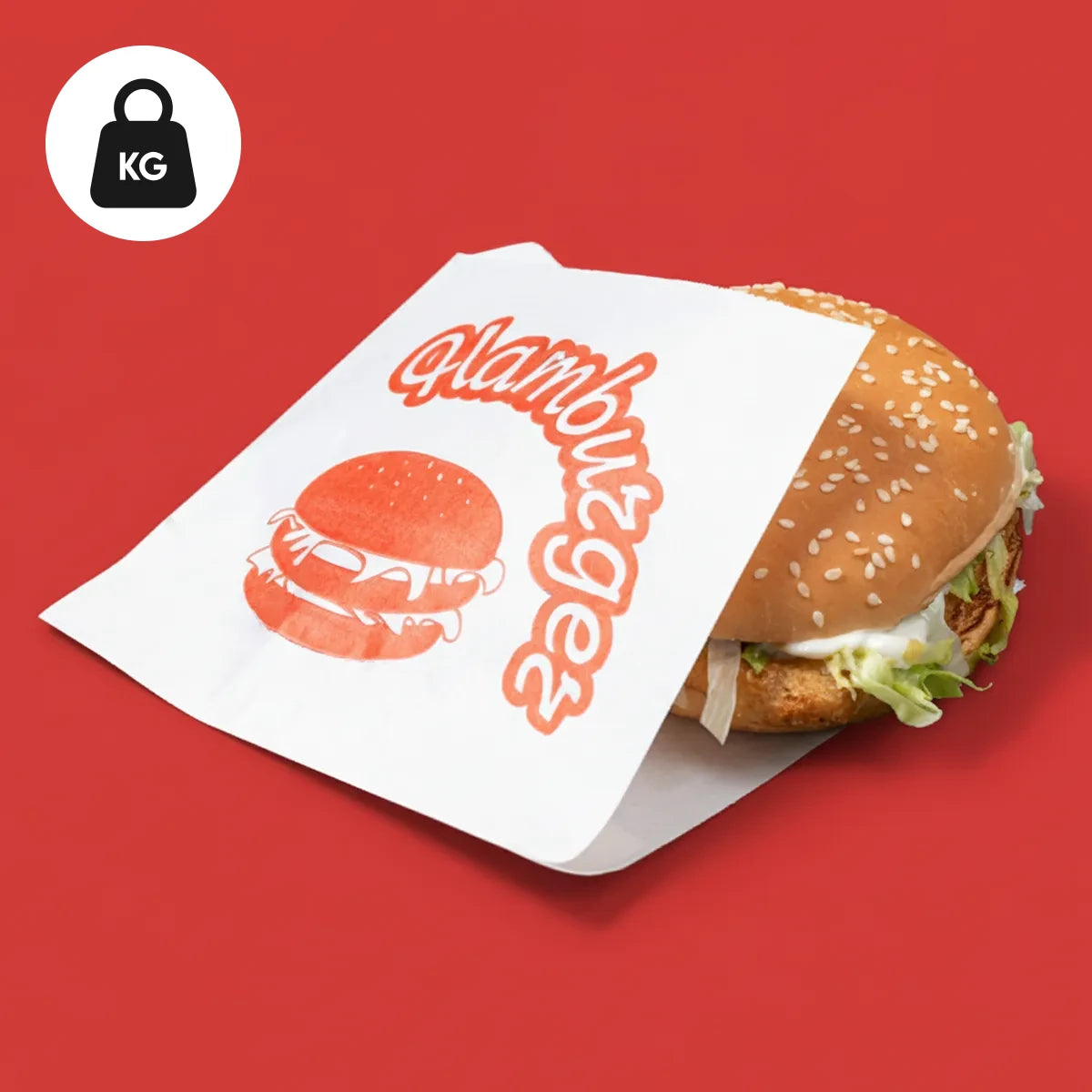
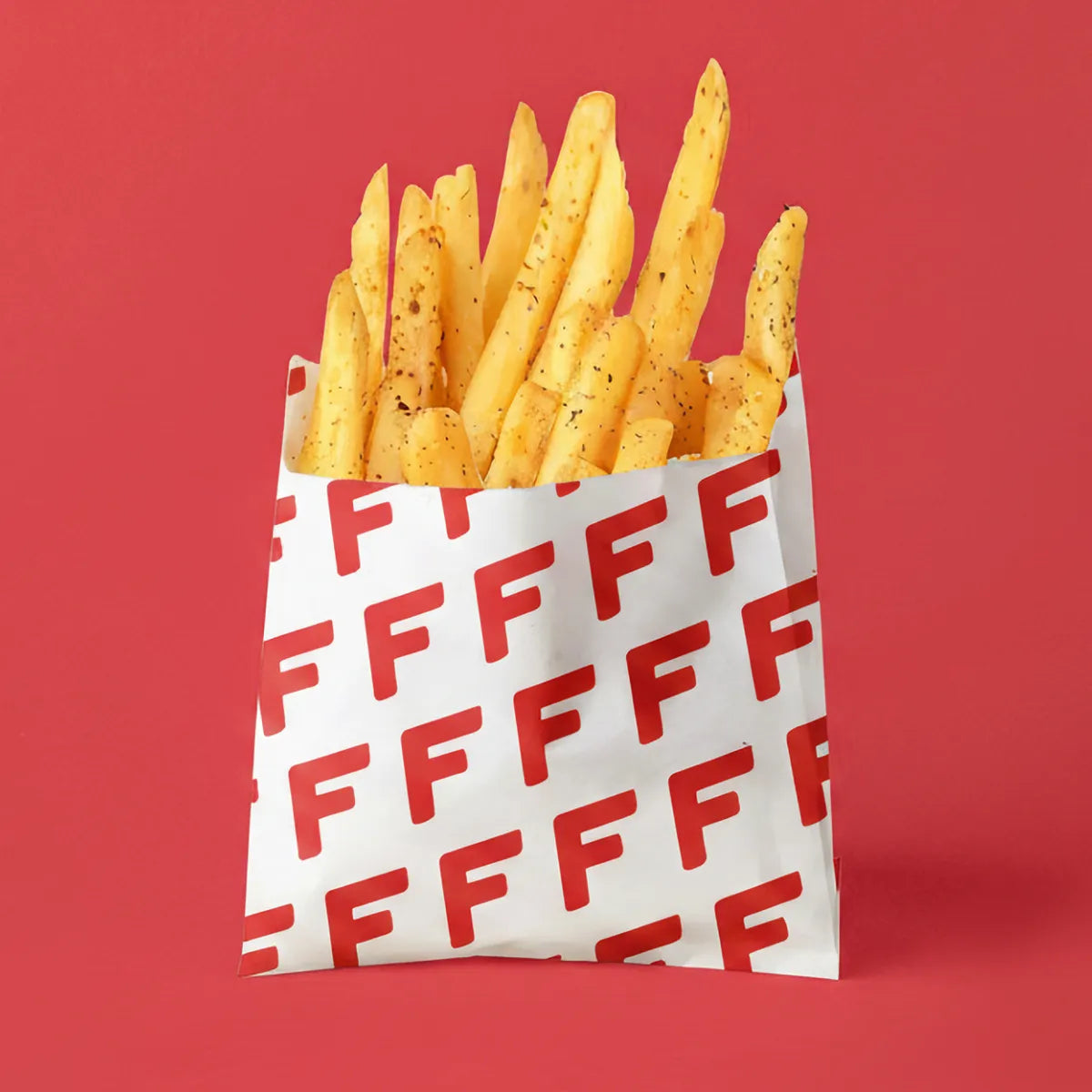
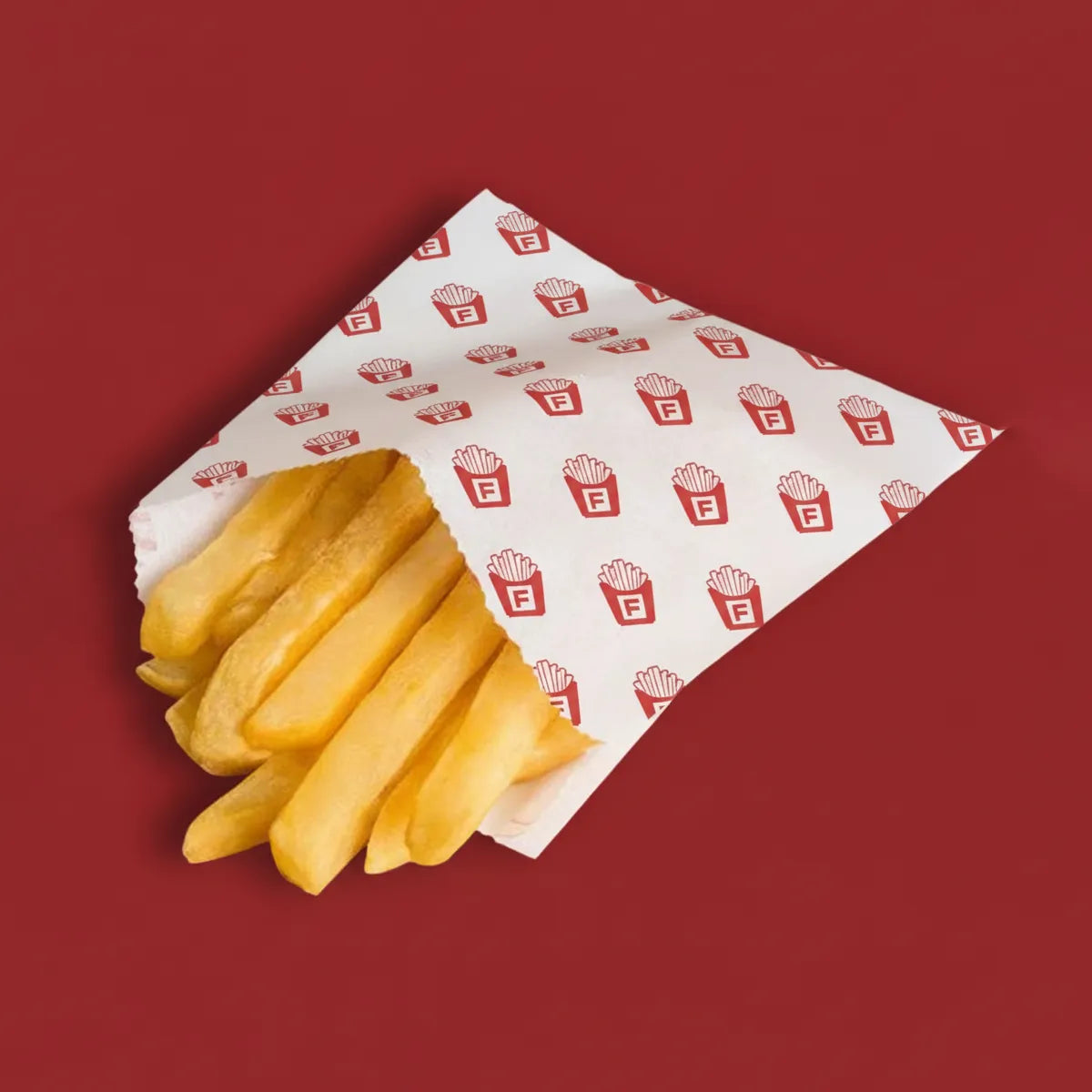
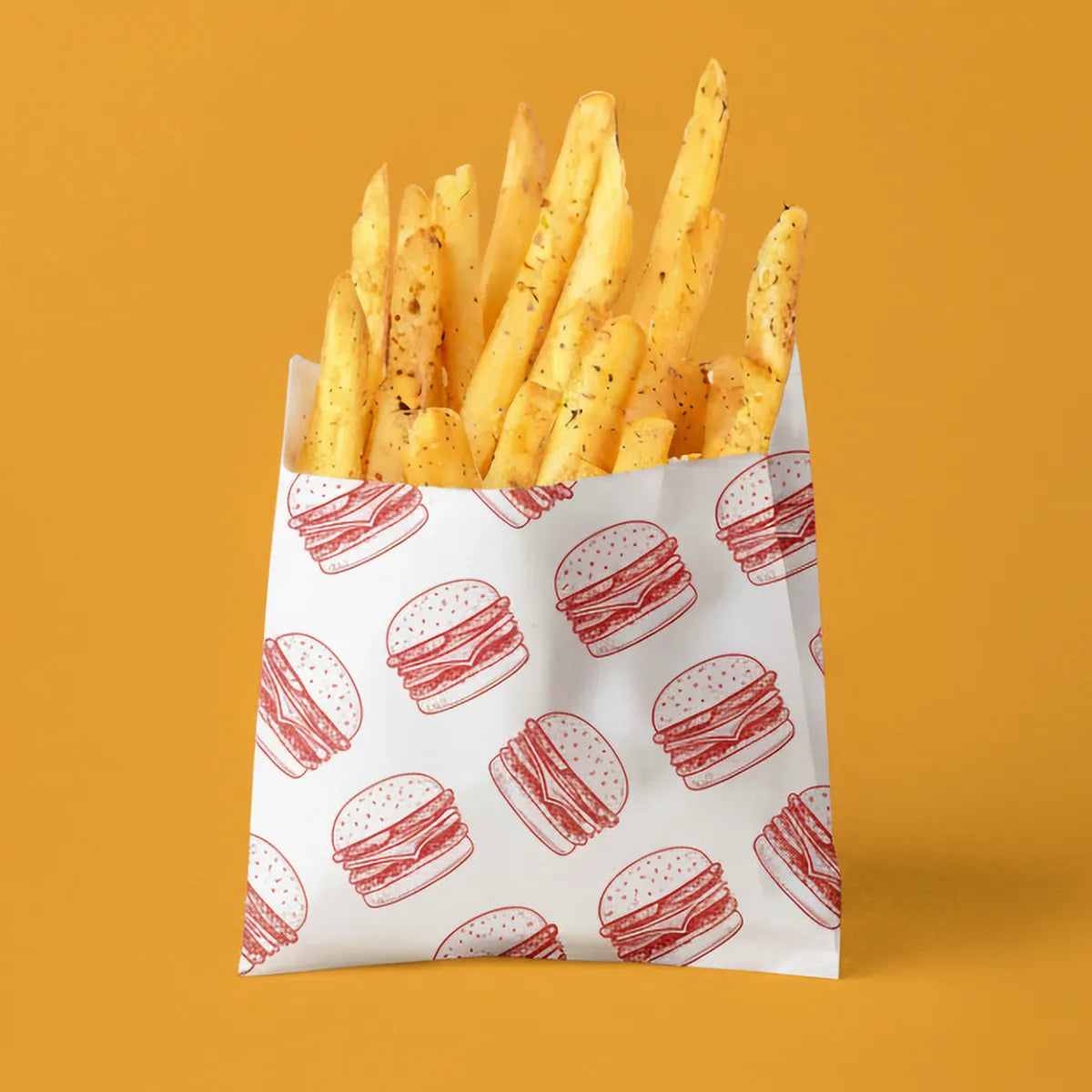
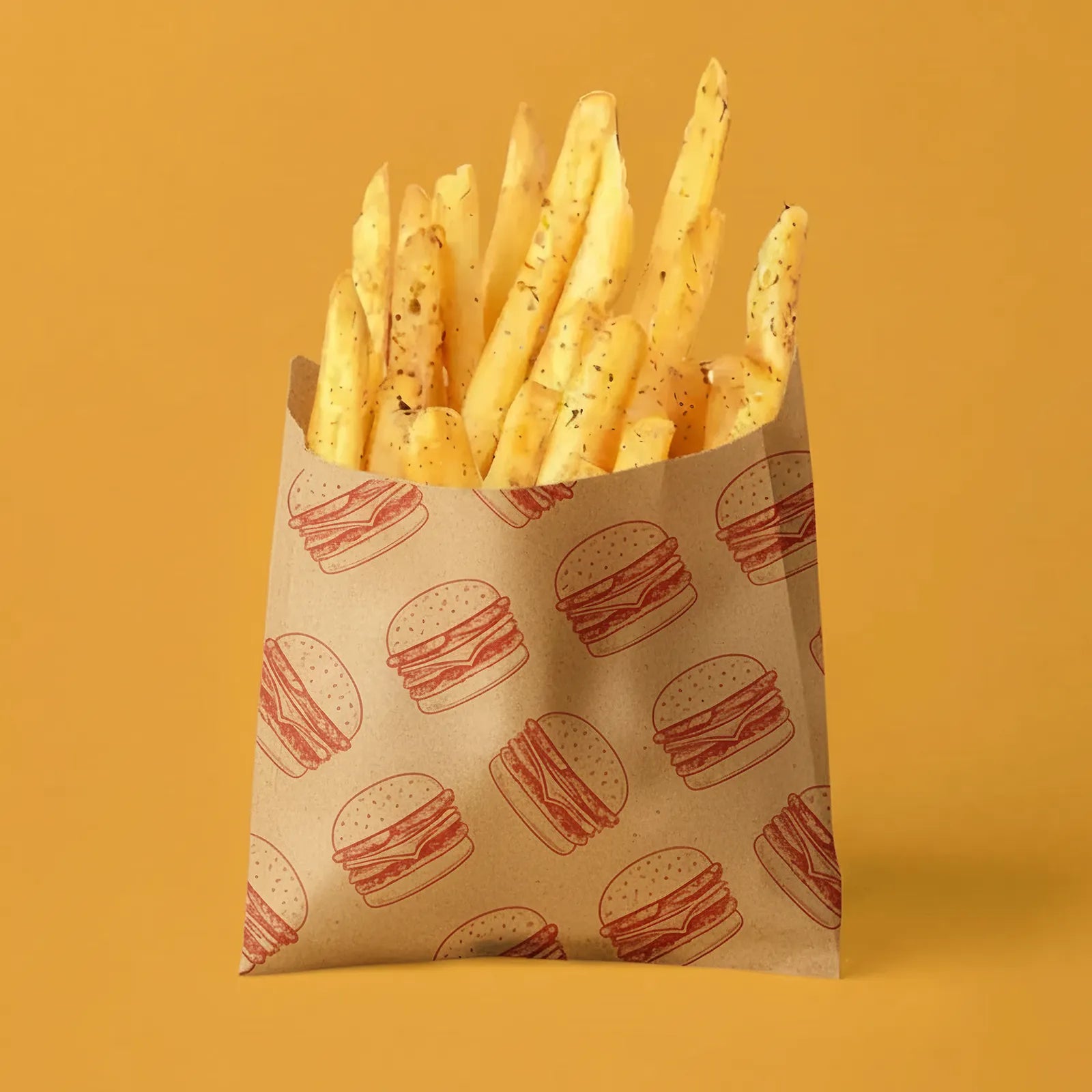
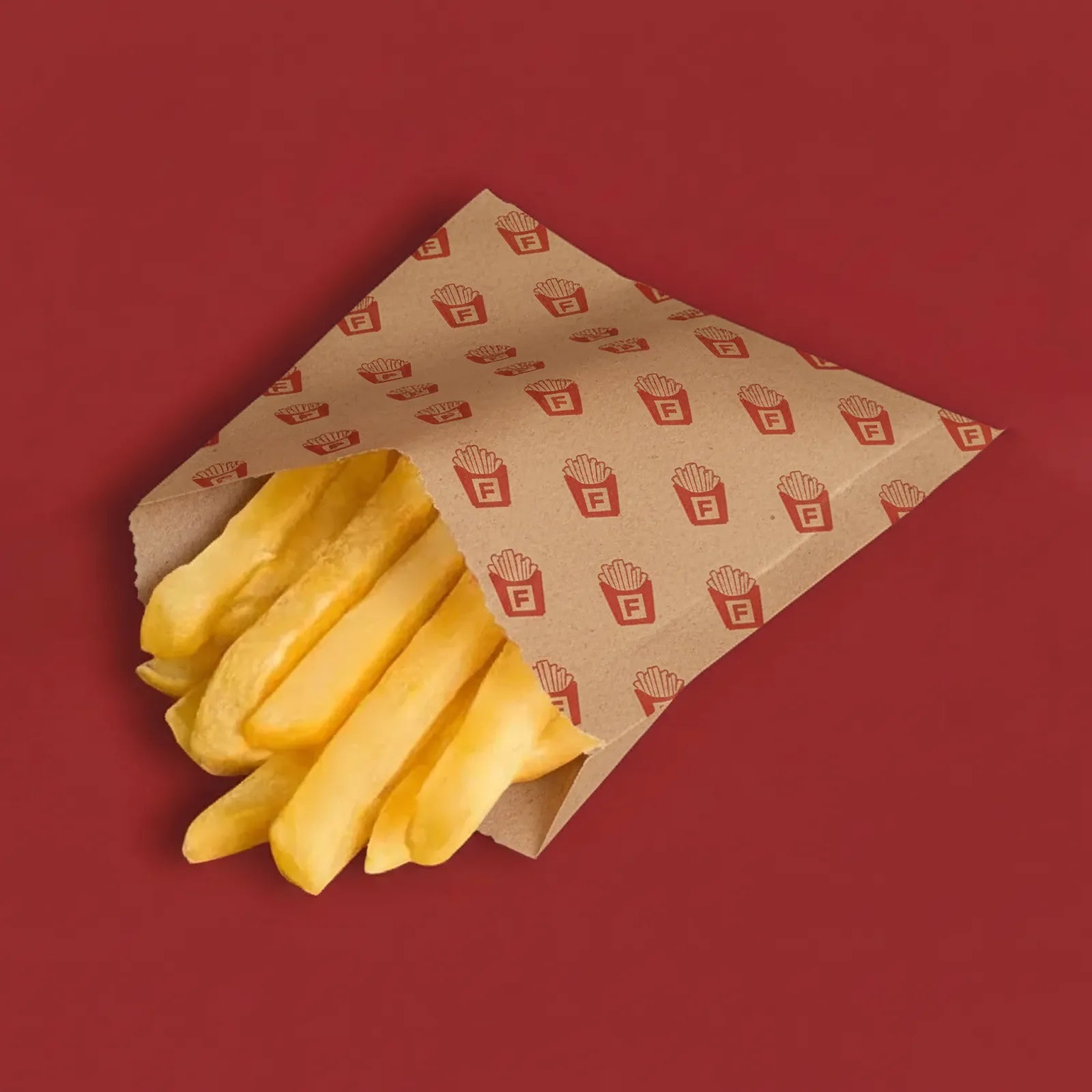
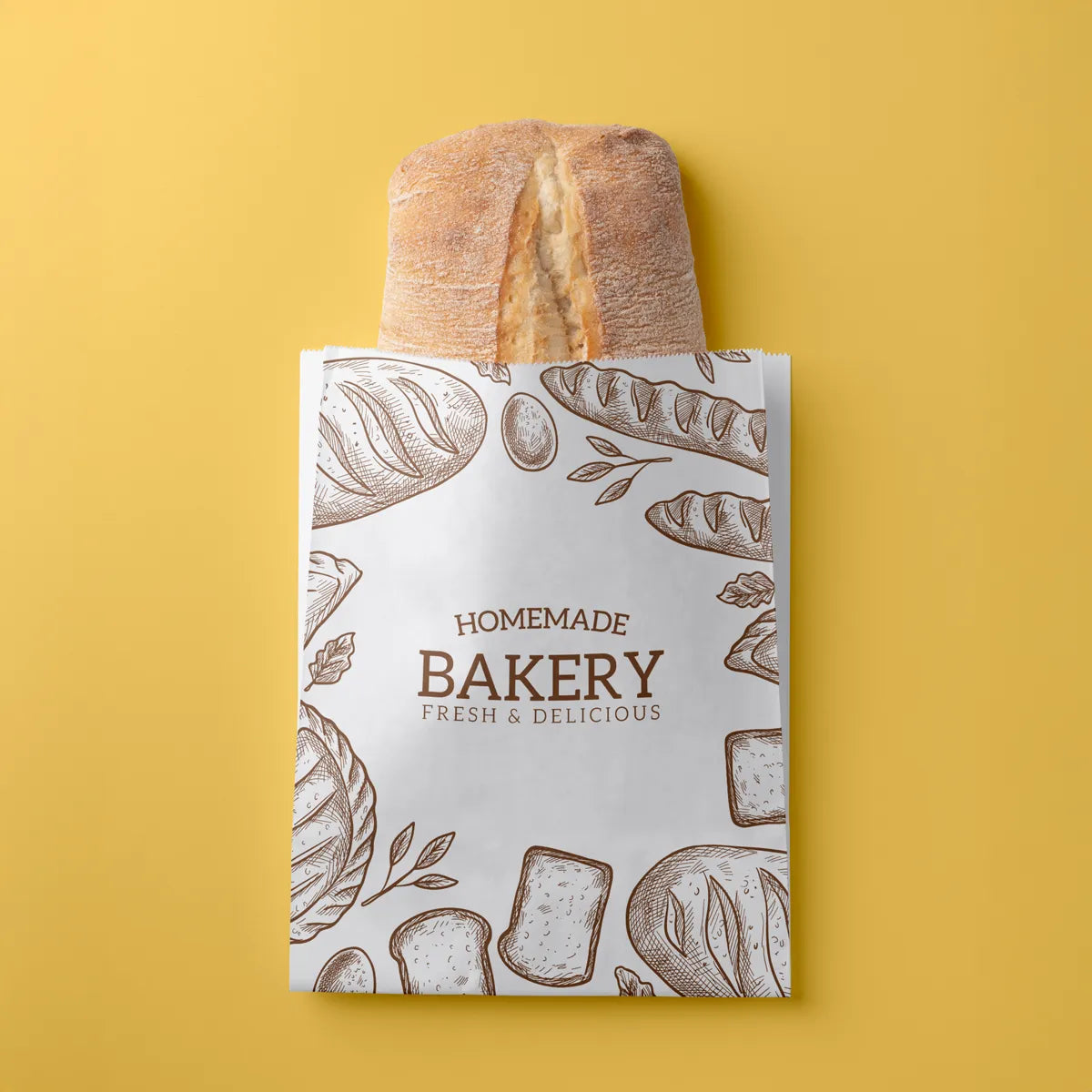
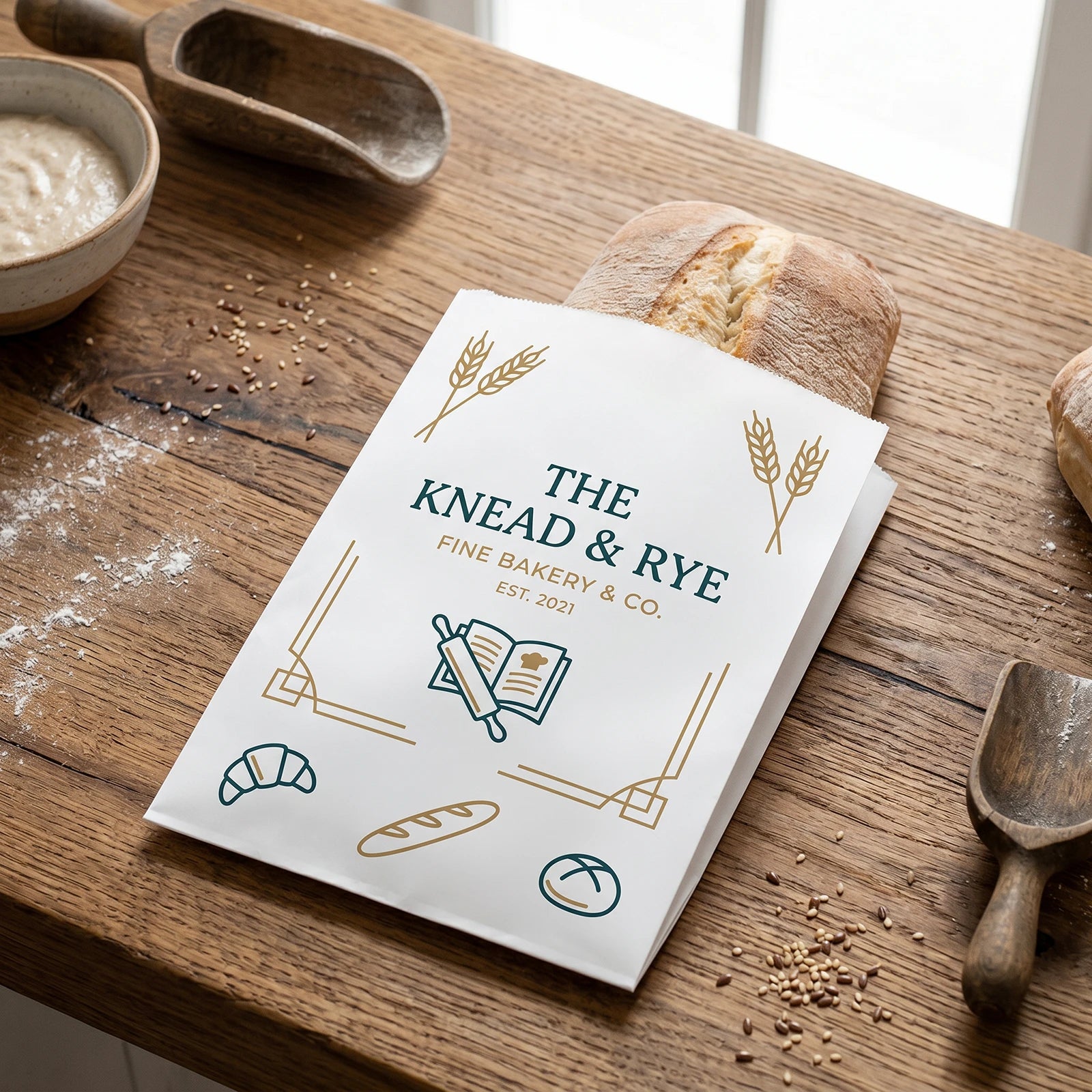
Custom printed greaseproof paper performs a different job from a box or tray. It can wrap food directly, line baskets and boxes or create a branded inner layer between the food and the structural package.
It is particularly useful for:
- burgers,
- sandwiches,
- bakery products,
- fast food,
- street food,
- basket liners,
- and foods where a flexible wrapping format is more practical than another rigid container.
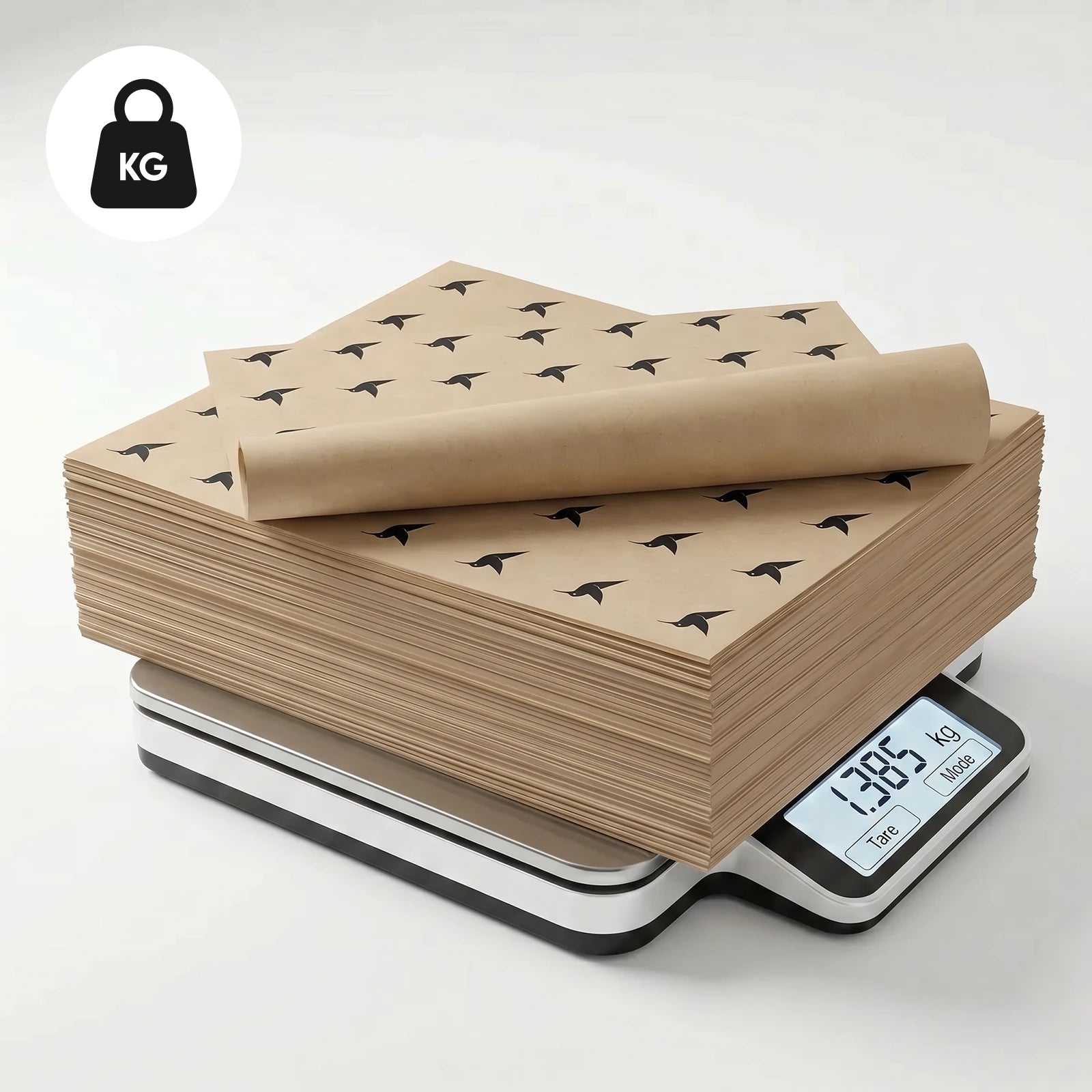
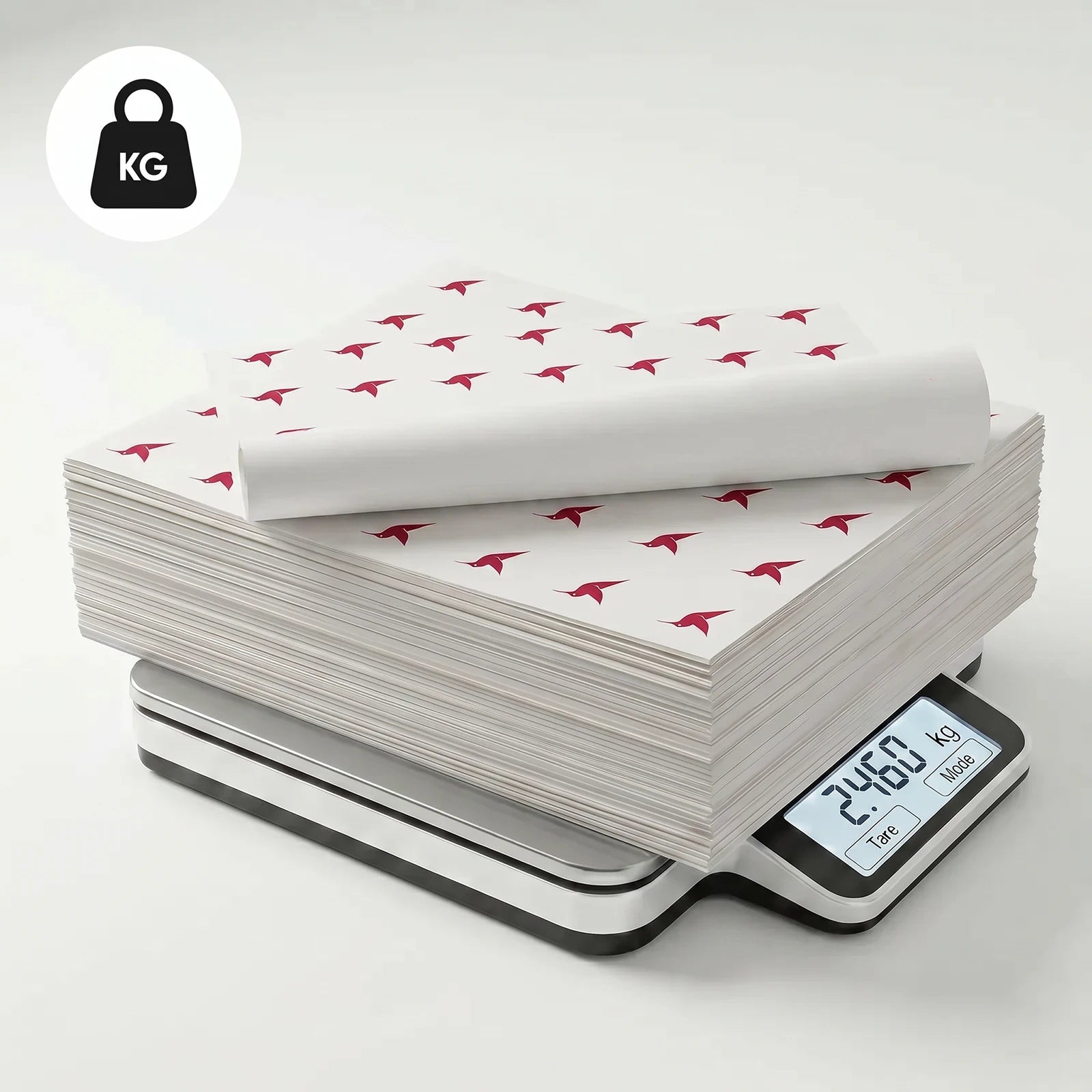
Selected White and Brown custom greaseproof products currently begin from 250 pieces, making this one of the lower-MOQ custom food packaging formats in the wider range.
Businesses can use greaseproof paper alone for suitable foods or combine it with trays and boxes as an inner branded layer.
Food Box, Tray or Greaseproof Paper: Which Is Best?
These three formats should not be treated as interchangeable.
Choose a Food Box When:
- the meal needs to be enclosed,
- food will travel for takeaway or delivery,
- several meal components need to remain together,
- or the box itself forms an important part of presentation.
Choose a Food Tray When:
- the food is eaten soon after service,
- open presentation is desirable,
- customers need easy access to the food,
- or the product is served in a food court, event or street-food environment.
Choose Greaseproof Paper When:
- food needs wrapping rather than rigid containment,
- a basket or tray needs a liner,
- a branded inner layer is useful,
- or the product is handheld.
In many takeaway systems these formats are used together rather than competitively.
Custom Burger Packaging
Burger restaurants may need several different packaging formats depending on how the menu is structured.
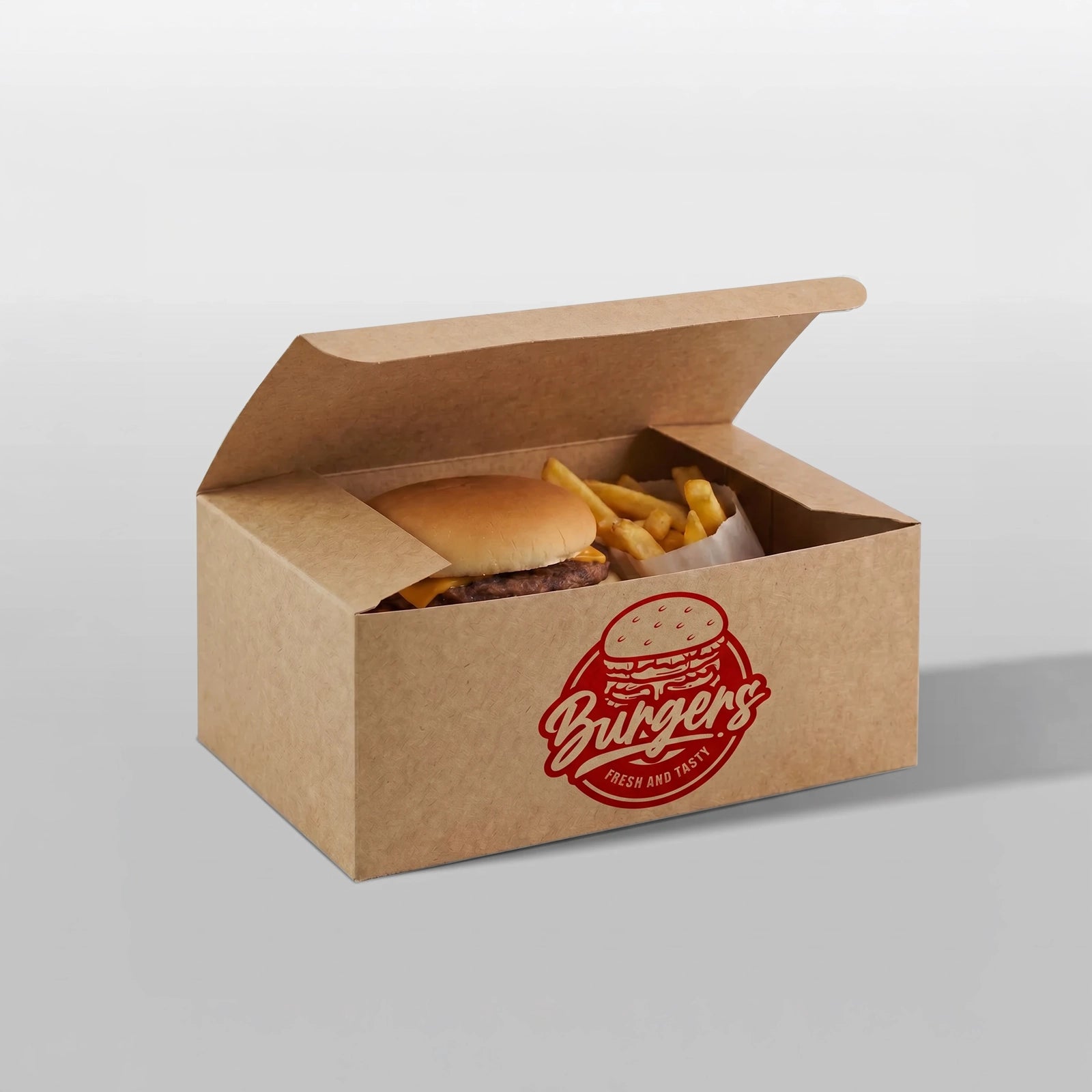
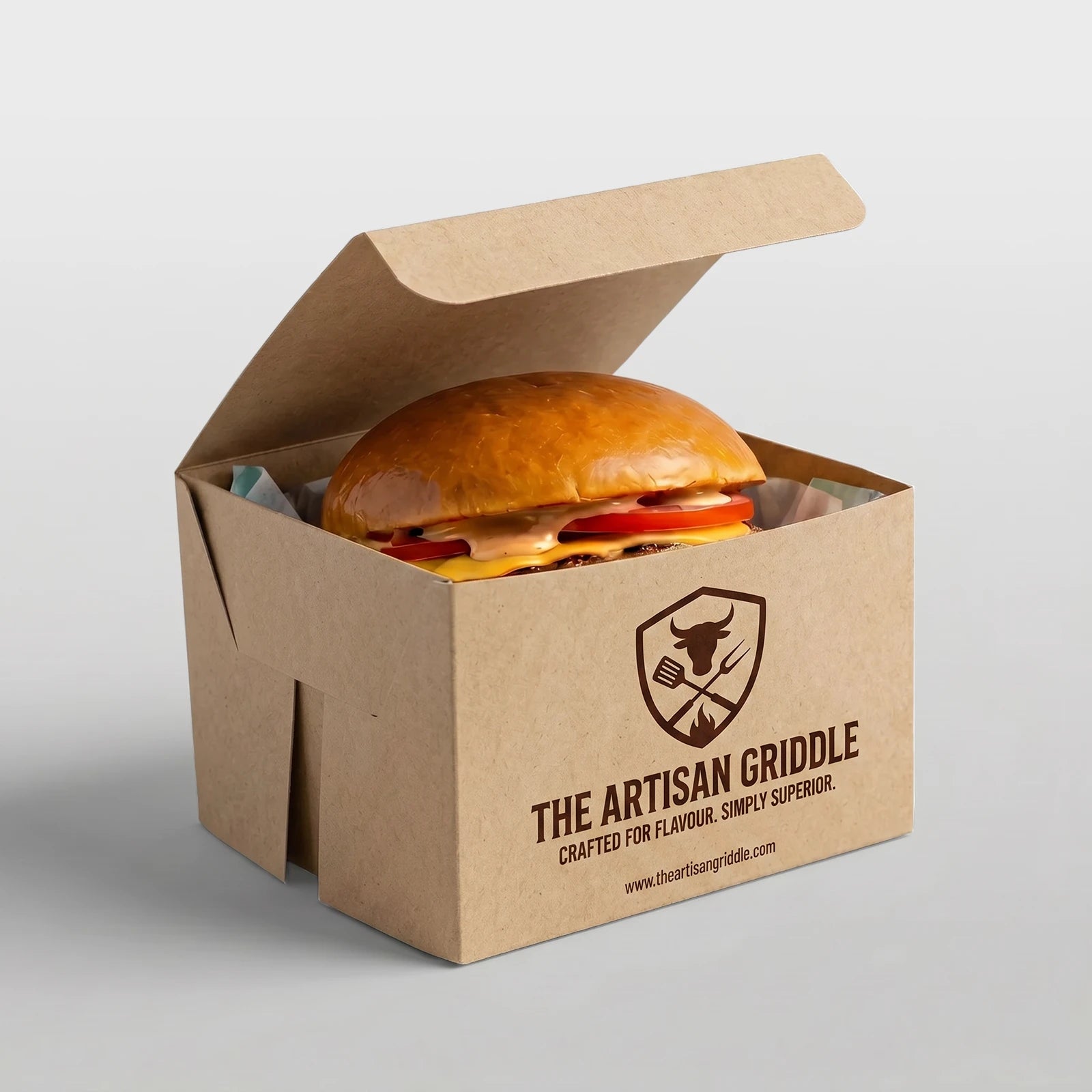
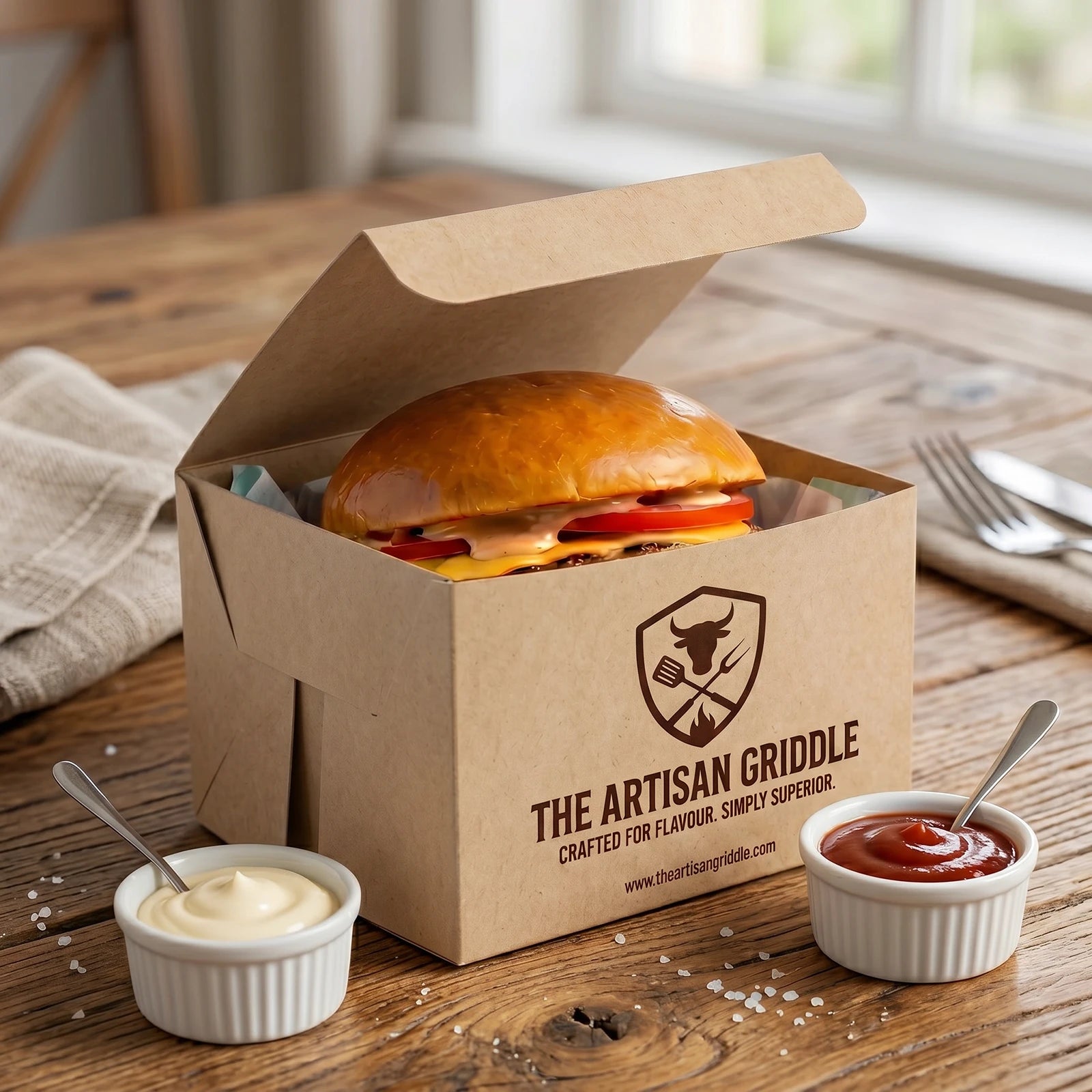
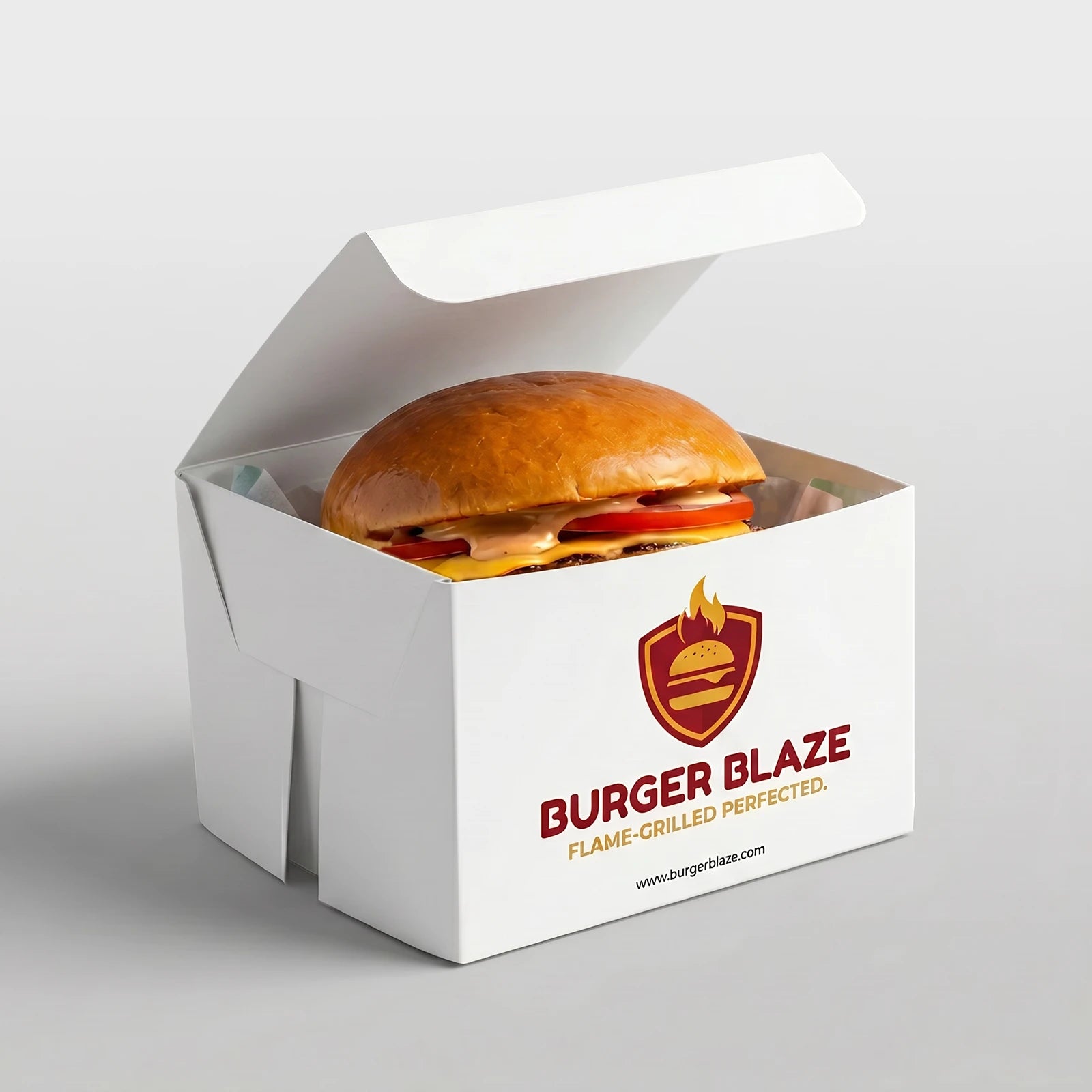
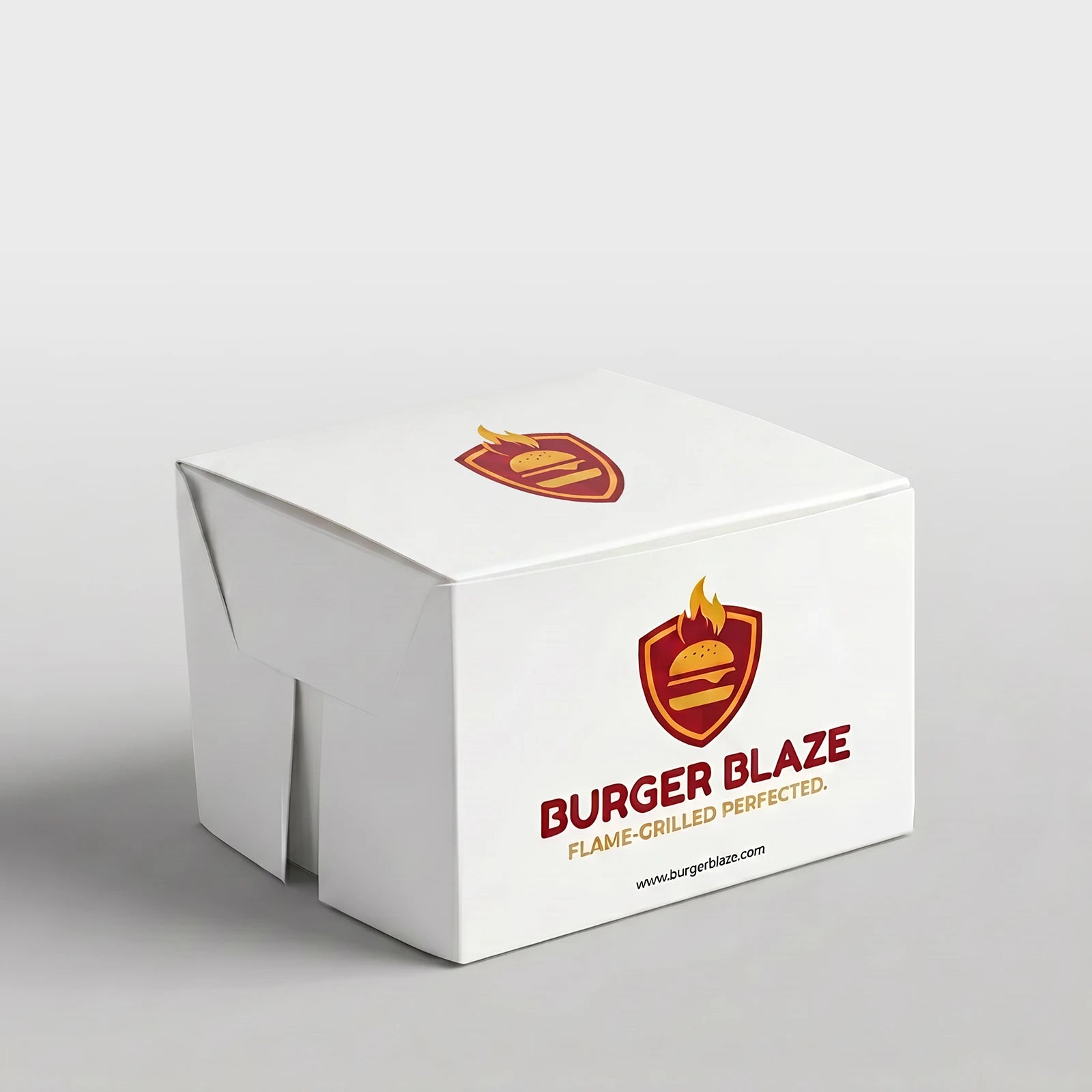
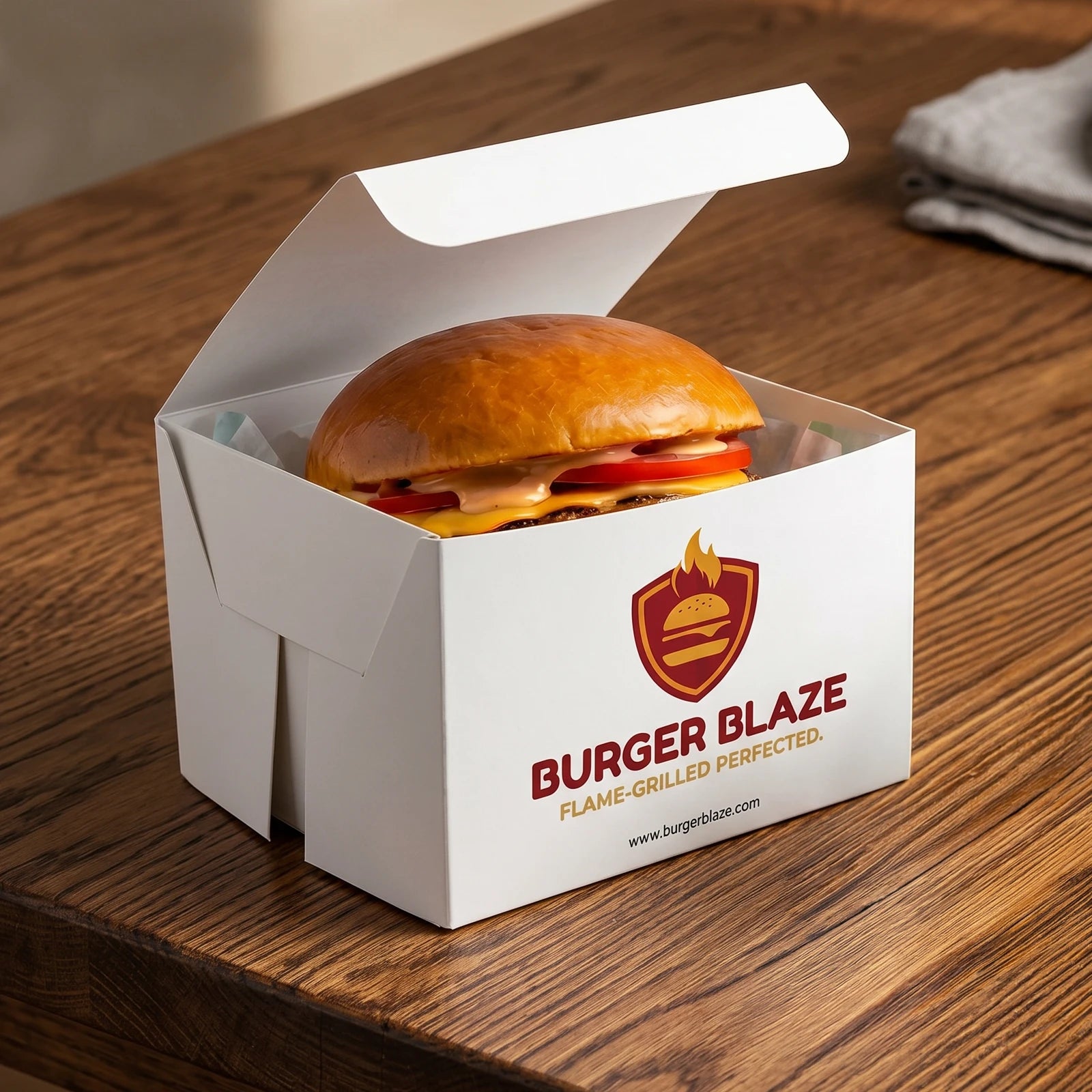
Custom printed burger boxes provide dedicated structural packaging for single burgers and meal combinations, while greaseproof paper can wrap the burger or line the box.
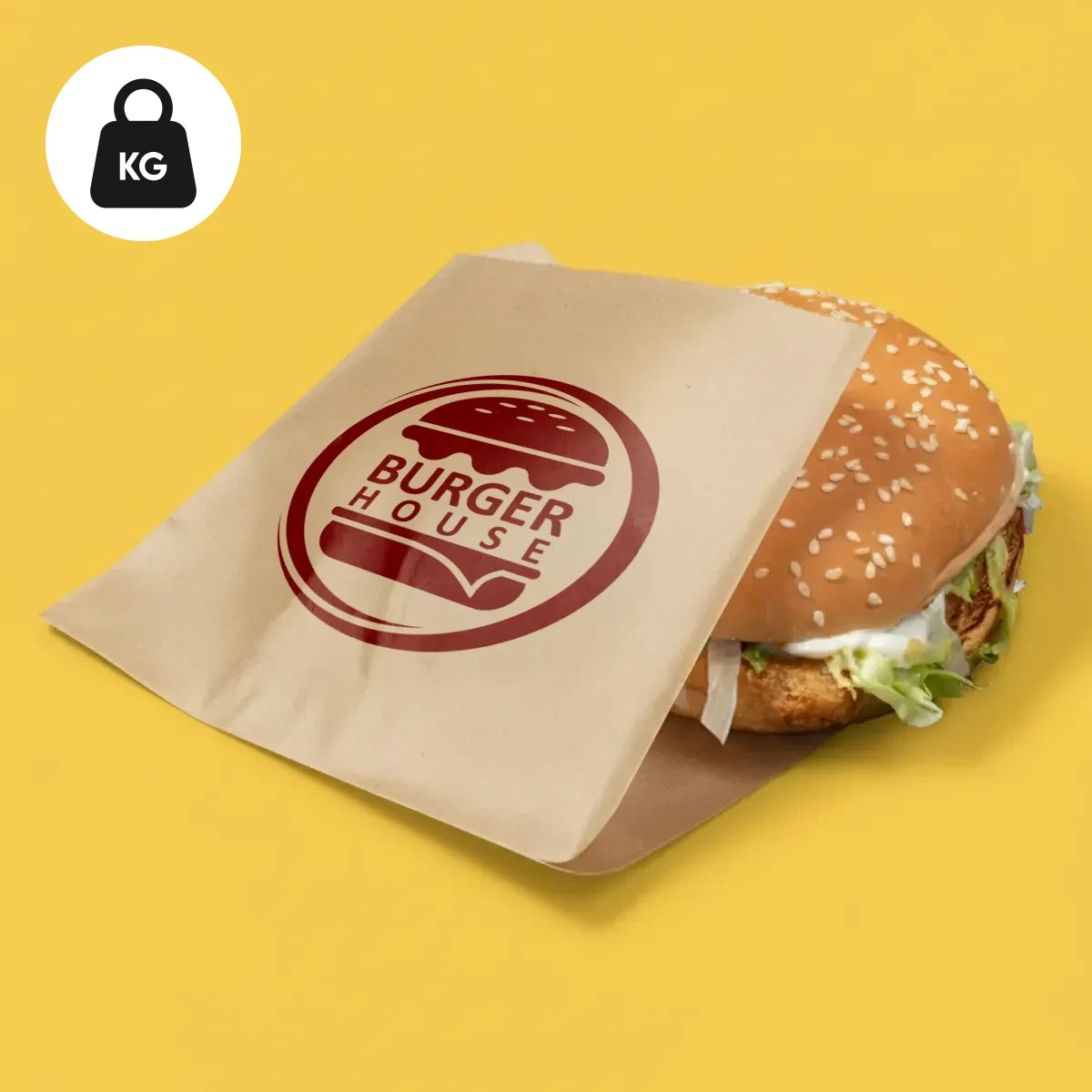
For lighter handheld service, specialist burger bags can provide another alternative.
A restaurant offering several burger sizes should select packaging according to:
- bun diameter,
- burger height,
- number of patties and toppings,
- whether fries or sides are included,
- and whether the order is eaten immediately or delivered.
This is why burger packaging is best treated as a small system rather than simply choosing one box for every menu item.
Custom Pizza Packaging
Custom printed pizza boxes are designed specifically around whole pizzas, while pizza slice trays provide a more efficient format for businesses selling individual portions.
Current digital White and Kraft pizza box products in Packonic's wider food packaging range start from 250 pieces.
Pizza businesses should choose the box according to the actual finished pizza size, not simply the nominal menu diameter. Crust style and product dimensions can affect the internal space required.
Pizza-by-the-slice businesses, food courts and event operators can instead use specialist slice packaging where a full box would be unnecessary.
Custom Doner & Kebab Packaging
Doner and kebab businesses have two distinct packaging requirements that should not be confused.
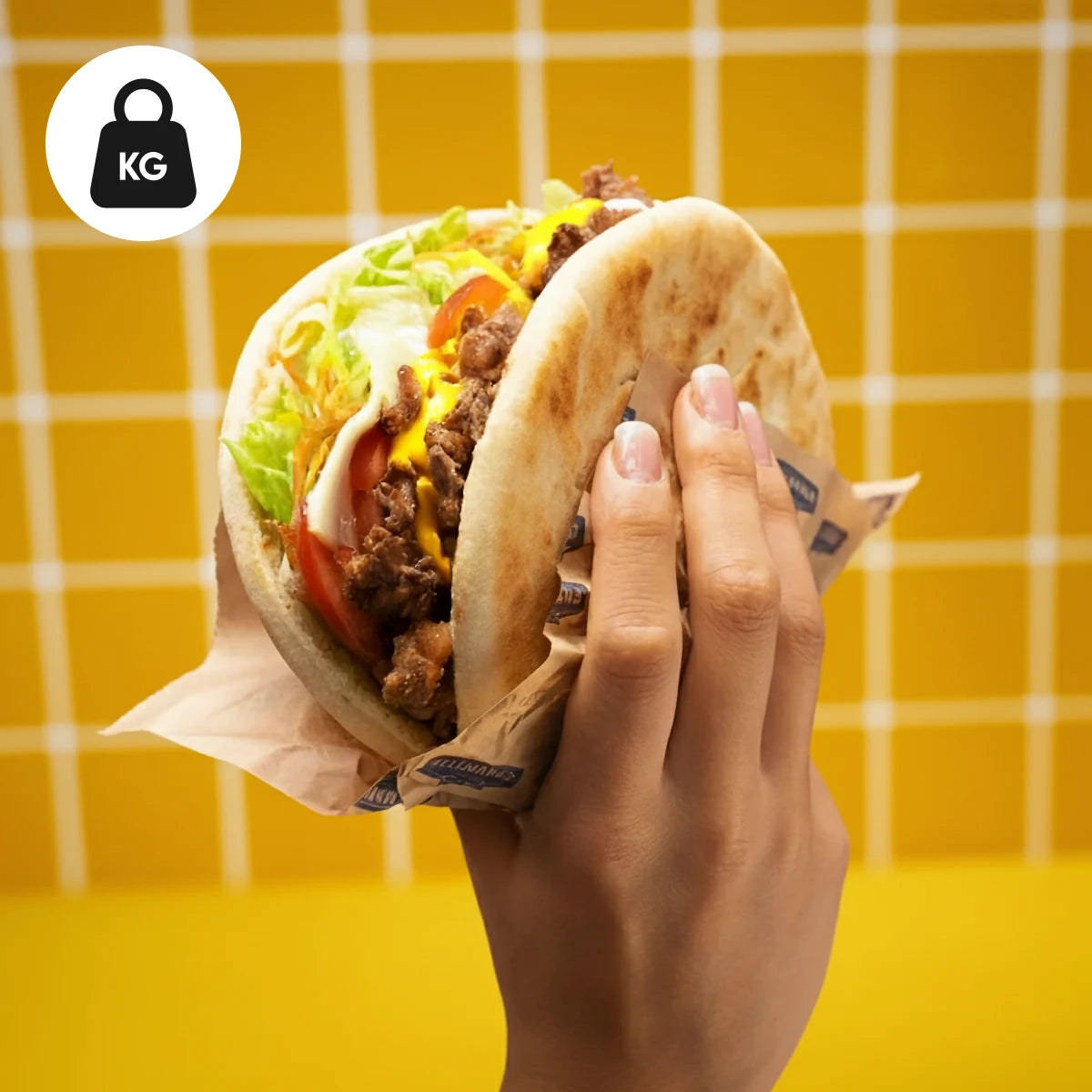
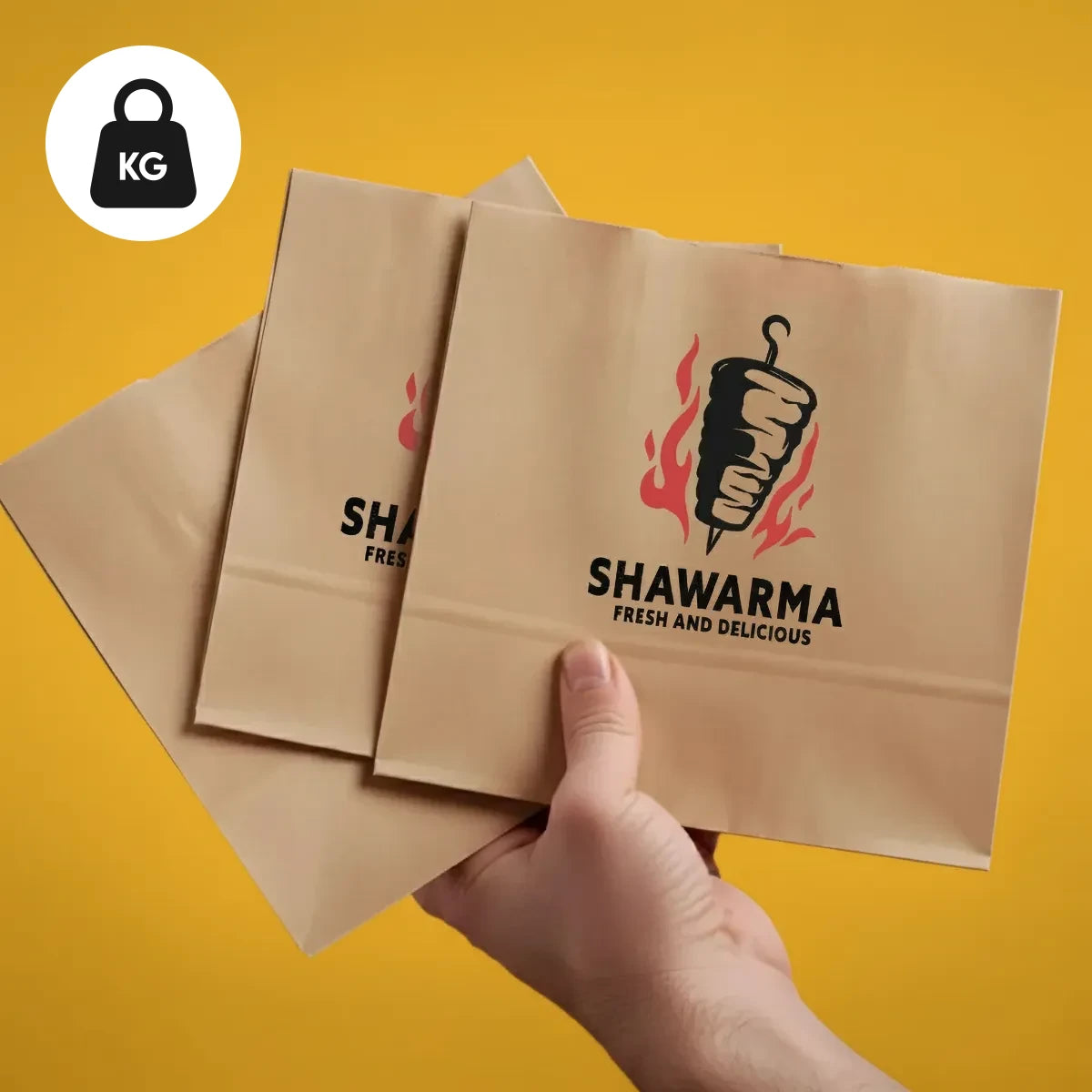
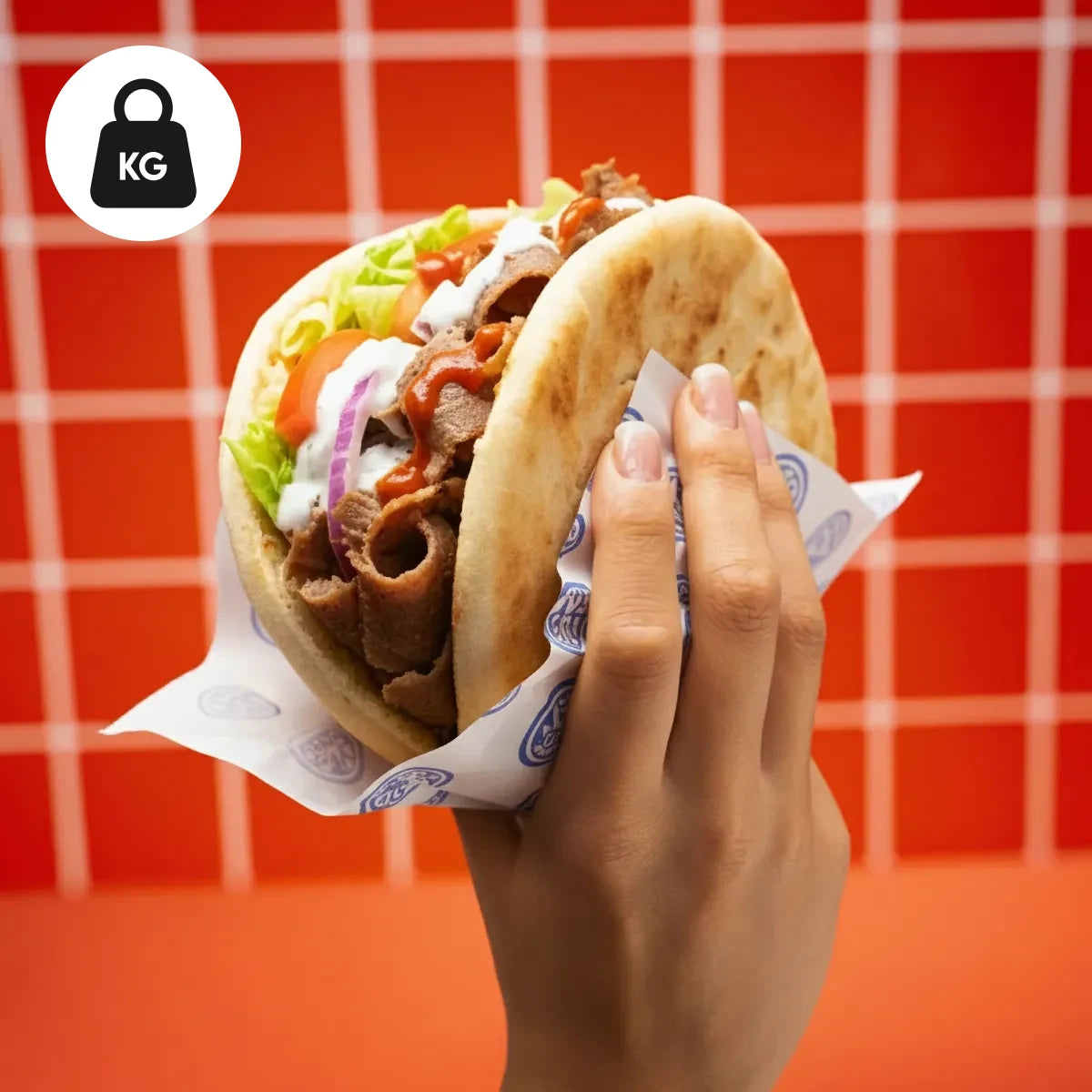
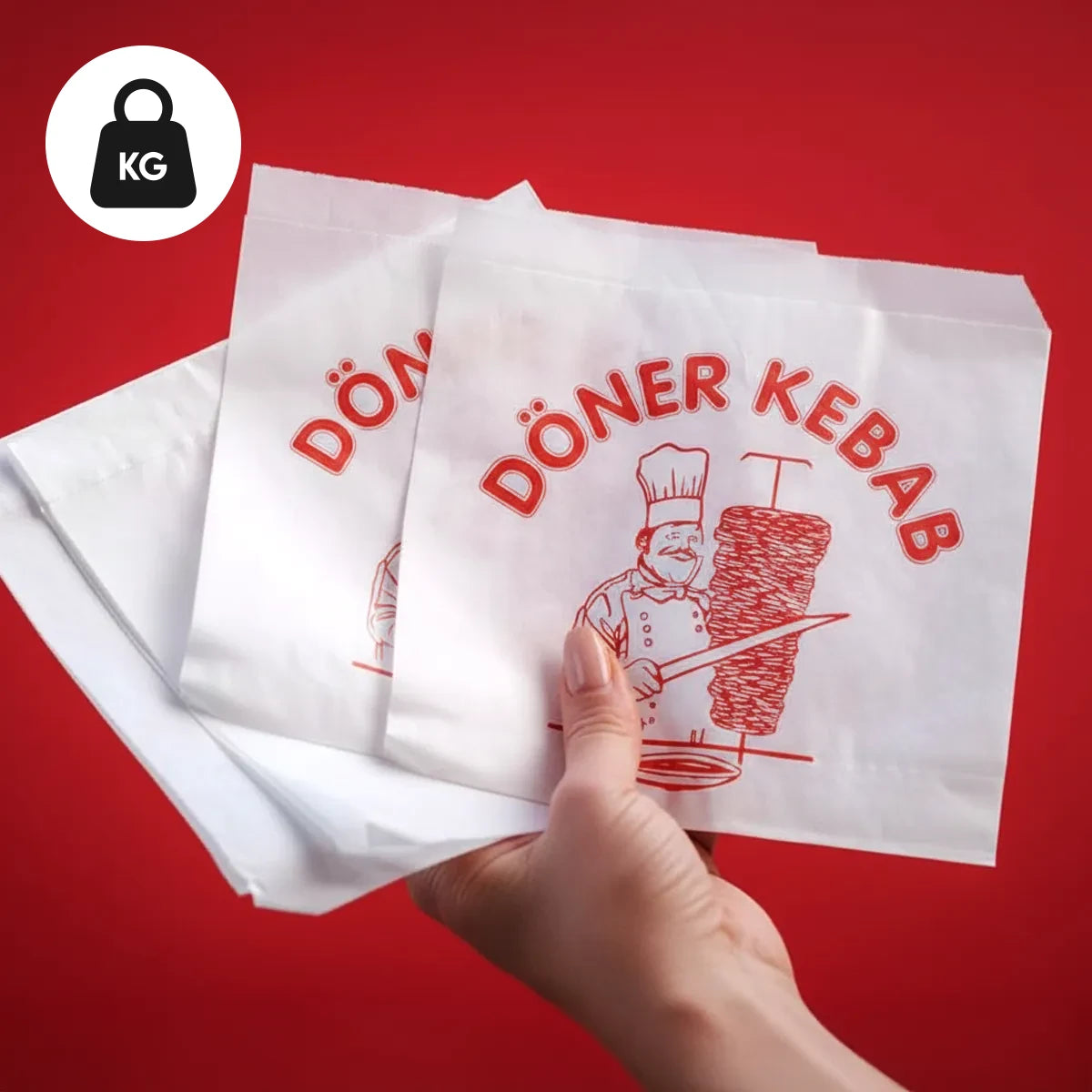
Doner bags are formed bag or pocket formats designed to hold handheld food, while doner wrapping paper is a flat sheet used to wrap or line the product.
Businesses serving doner, kebab, gyros and similar foods should choose according to how the meal is assembled and eaten:
- Bag or pocket: useful for direct handheld takeaway service.
- Flat wrapping paper: useful for wrapping, lining and flexible presentation.
Keeping these intents separate helps businesses choose packaging according to the actual service method instead of treating every paper food format as the same product.
Custom Printed Food Pouches & Paper Food Bags
Custom printed paper food pouches provide a lighter alternative to rigid food boxes for selected menu items.
These formats can be useful for:
- sandwiches,
- bakery products,
- fries,
- snacks,
- handheld fast food,
- and products where a full box would add unnecessary volume.
Choosing between a pouch and a box should depend on food shape, required protection and customer handling.
Takeaway Food Packaging for Restaurants & Delivery
Takeaway food packaging needs to perform after the meal leaves the kitchen. A package that works well for immediate dine-in service may not necessarily work well during a 20-minute delivery journey.
For takeaway and delivery, businesses should consider:
- how securely the packaging closes,
- whether the food can move inside the package,
- how multiple items stack together,
- whether the packaging fits inside the outer carrier bag,
- how staff pack orders during busy periods,
- and how visible the restaurant branding remains when the order reaches the customer.
This makes custom takeaway packaging both an operational and branding decision.
Restaurant Food Packaging for Dine-In, Collection & Delivery
Restaurants often need more than one packaging format because the same menu can be served through dine-in, customer collection and third-party delivery.
A useful restaurant packaging system might include:
- food boxes for complete meals,
- greaseproof paper for wrapping or lining,
- trays for immediate serving,
- pouches for lighter handheld products,
- napkins and wet wipes for customer convenience,
- and branded paper bags for the complete takeaway order.
The goal is not to use as many packaging products as possible. It is to use the minimum number of formats required to serve the menu efficiently and consistently.
Fast Food & QSR Packaging
Fast food packaging needs to balance speed, consistency and repeatable packing during high-volume service.
For quick-service restaurants, packaging decisions should consider:
- assembly speed,
- portion control,
- standardisation across staff and locations,
- storage space for flat packaging,
- how efficiently packaging moves through the service line,
- and whether the same artwork can be used consistently across several formats.
Easy Assembly boxes and trays can be particularly relevant where staff need to form packaging throughout busy service periods.
Food Packaging for Cafés & Bakeries
Cafés and bakeries usually have more varied packaging needs than a specialist single-product restaurant.
The same business may sell:
- sandwiches,
- pastries,
- cakes and desserts,
- snacks,
- coffee,
- cold drinks,
- and retail products.
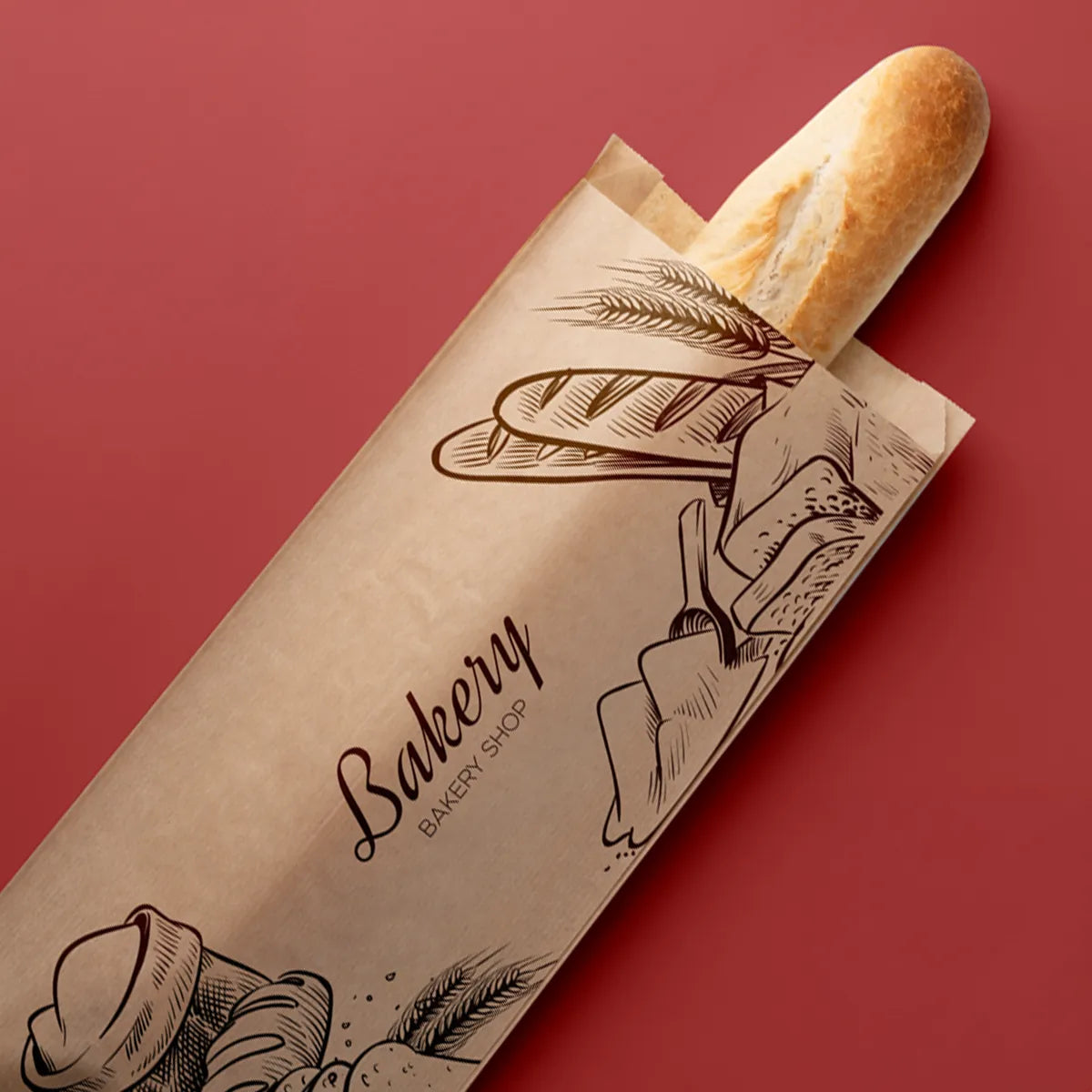
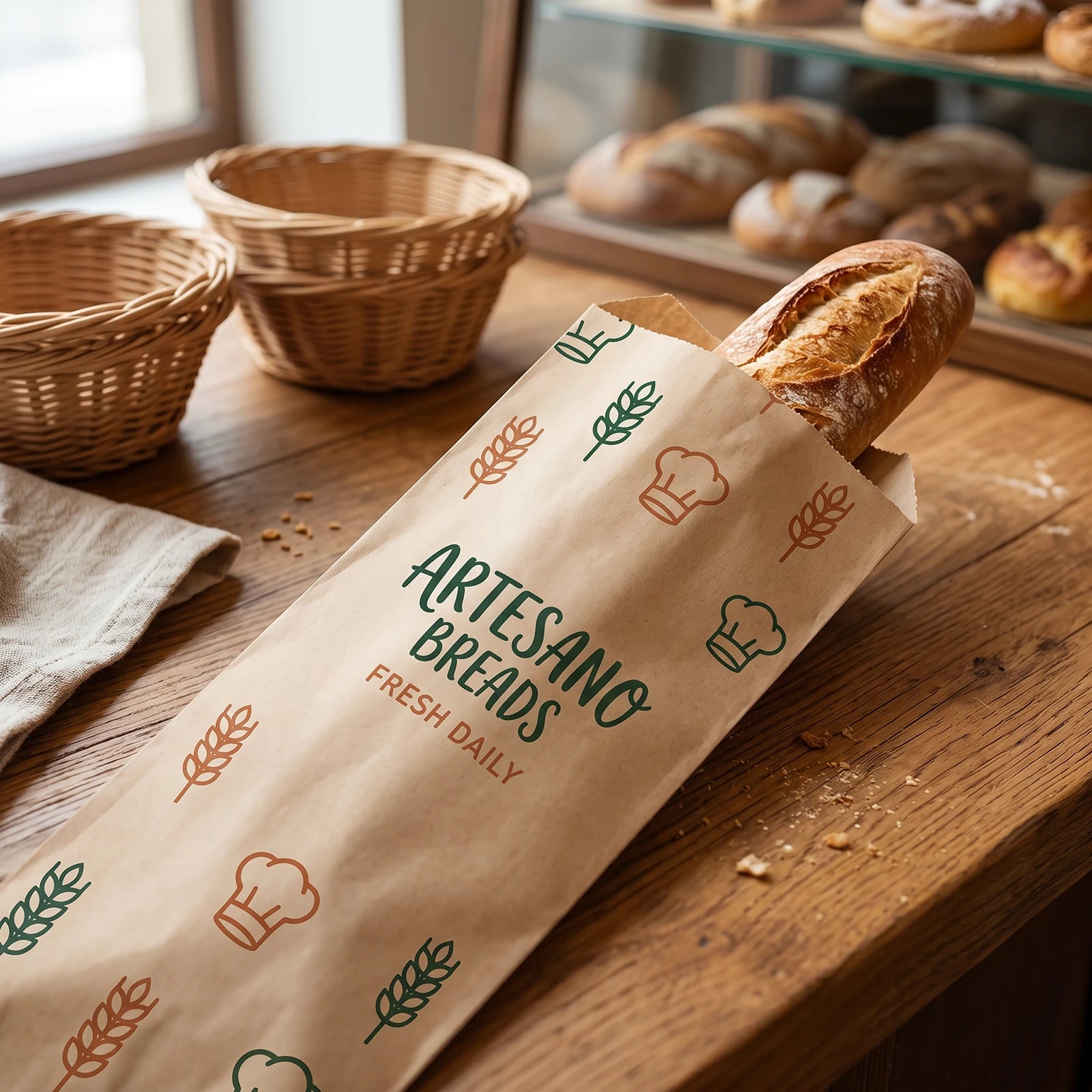
This means packaging may include greaseproof wrapping for bakery products, boxes for desserts, pouches for sandwiches and branded carrier bags for mixed orders.
Drink-focused packaging such as paper and plastic cups belongs within Packonic's separate Coffee & Drink Packaging range, helping keep beverage packaging distinct from this food-focused hub.
Street Food, Food Courts & Event Packaging
Street-food operators and food courts often prioritise easy handling and immediate consumption.
Useful packaging formats can include:
- open paper trays,
- greaseproof liners,
- food pouches,
- burger packaging,
- pizza slice trays,
- napkins,
- and outer carrier bags when several items are purchased together.
Businesses working at temporary events should also consider storage space and packaging assembly speed because operating environments can be more restricted than in a permanent restaurant.
Food Packaging for Dark Kitchens & Delivery-Only Brands
For dark kitchens and delivery-only businesses, packaging becomes one of the strongest physical brand interactions because the customer may never see the restaurant itself.
Branded food packaging can help connect the physical meal to the restaurant identity shown on a delivery platform.
Operations managing several virtual restaurant concepts from one kitchen should also think carefully about:
- how packaging distinguishes each brand,
- whether several concepts can share structural formats,
- where brand-specific printing is most valuable,
- and how packaging stock can be managed without creating unnecessary complexity.
White or Kraft Food Packaging?
White and Kraft are common visual directions across several Packonic paper food packaging products.
White Food Packaging
White paper provides a neutral background that can help colourful logos and detailed artwork stand out.
It can suit:
- modern restaurants,
- bright brand identities,
- colourful artwork,
- dessert and bakery brands,
- and businesses that prefer a clean presentation.
Kraft Food Packaging
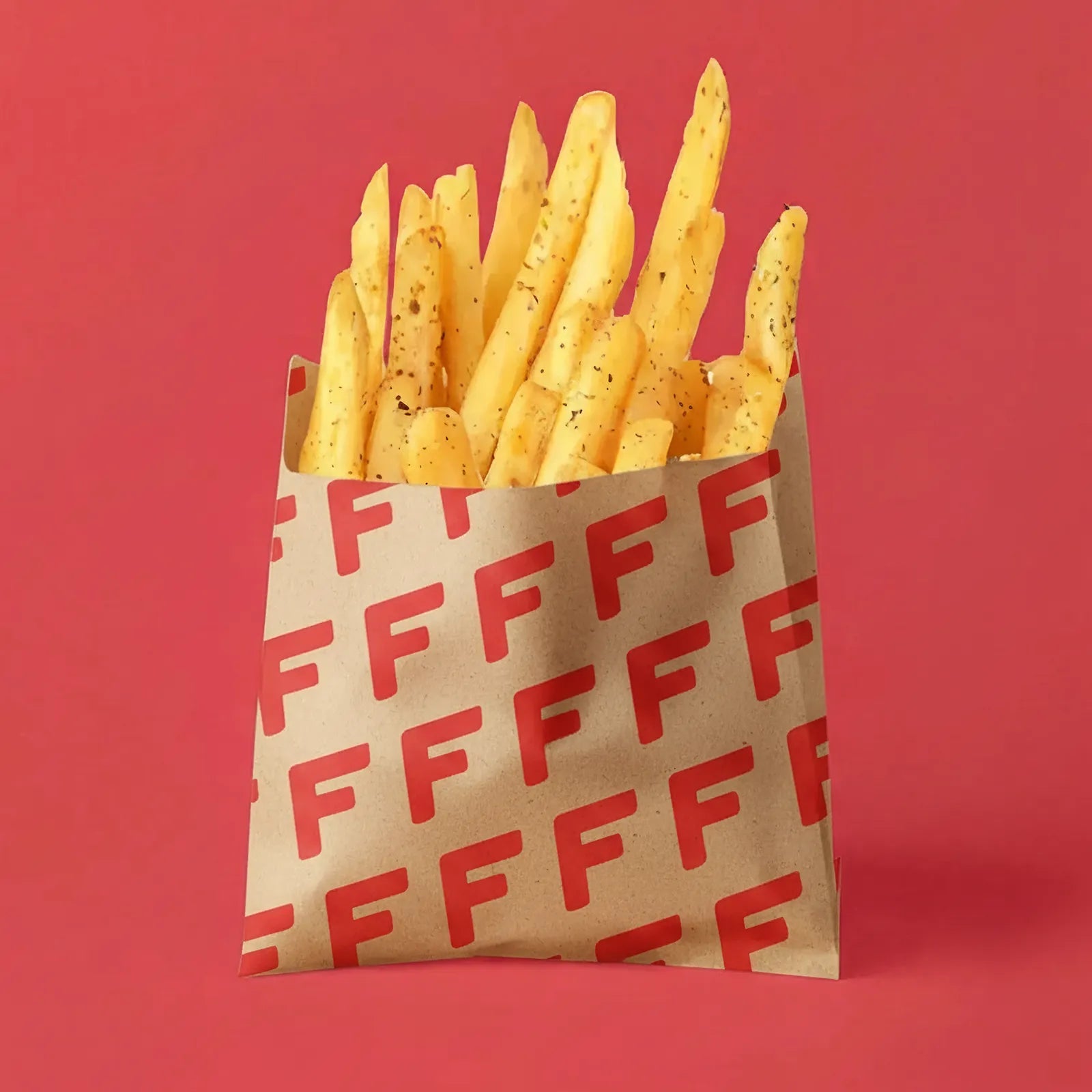
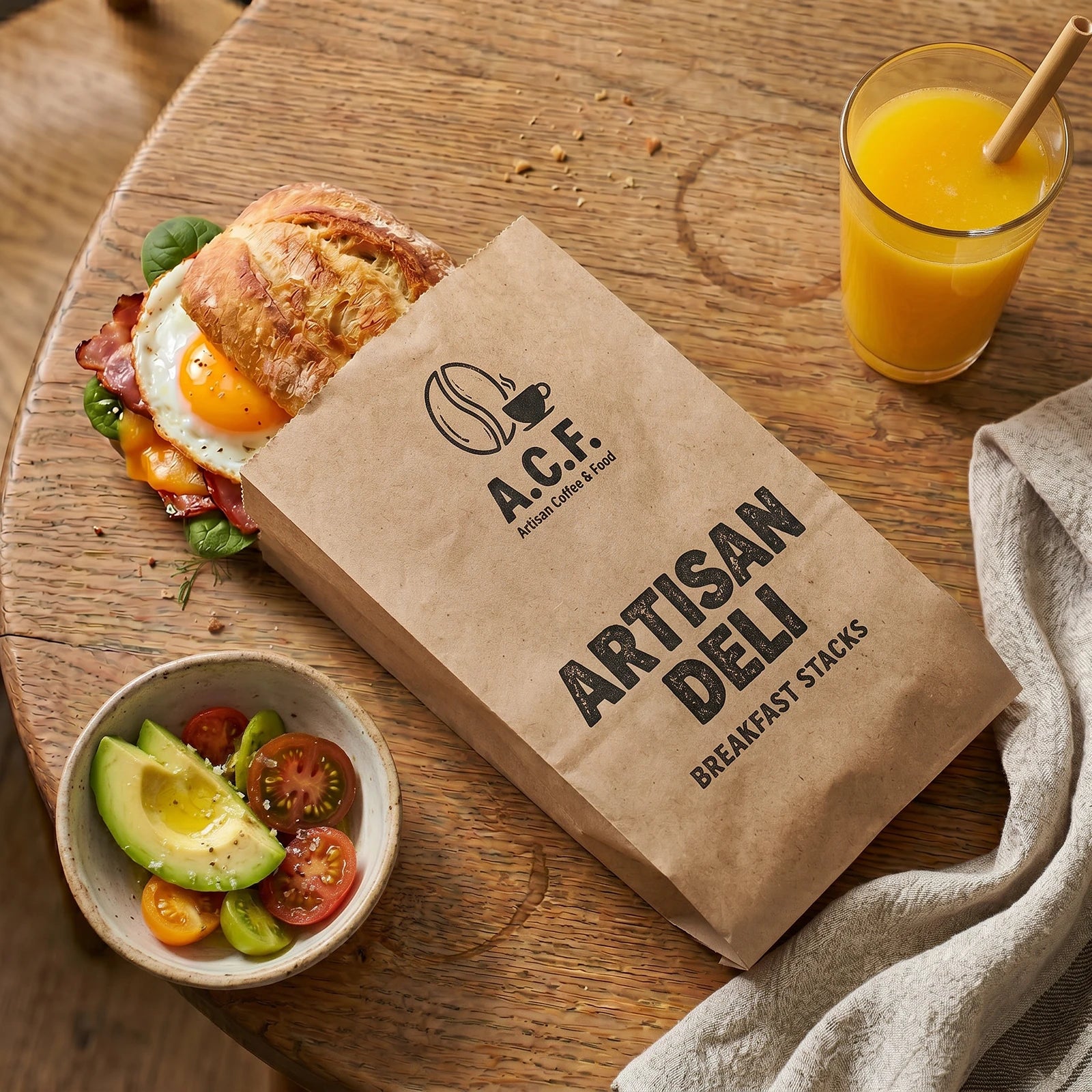
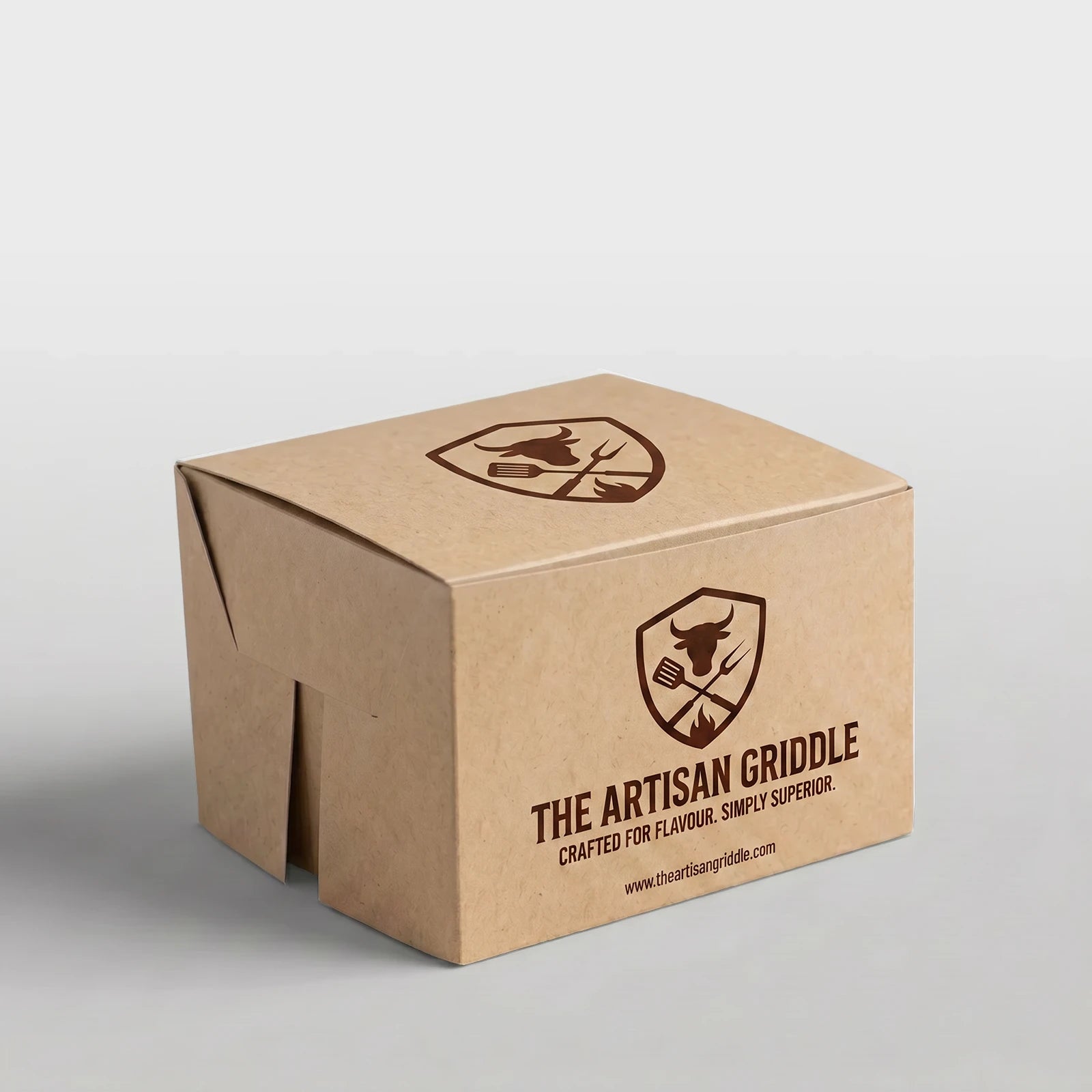
Kraft retains the natural brown appearance of the paper and can suit:
- street-food concepts,
- burger restaurants,
- bakeries,
- casual dining,
- artisan brands,
- and businesses using darker or earth-tone artwork.
White and Kraft should therefore be selected according to the specific product and brand identity rather than assuming one material colour is universally better.
Custom Food Packaging With Logo & Brand Artwork
Food packaging with logo creates a consistent visual link between the restaurant and the physical meal.
Branding can be applied across several formats so that the customer sees the same identity on:
- food boxes,
- trays,
- greaseproof paper,
- burger packaging,
- pizza boxes,
- food bags,
- napkins,
- and takeaway carrier bags.
A business does not need to cover every product with complex artwork. A clear logo, consistent colours and repeatable visual system can often create stronger recognition than using unrelated packaging designs across the menu.
Choosing the Right Printing Method for Food Packaging
There is no single printing method used across every type of custom printed food packaging. The correct process depends on the packaging material, structure and quantity.
For example, selected Packonic Easy Assembly food boxes and paper food trays use offset printing on 300 GSM White or Kraft paper.
Other specialist products use different printing methods according to the material and product format.
Businesses should therefore evaluate printing as part of the exact product specification rather than assuming that every box, paper or bag is printed in the same way.
Low MOQ & Higher-Volume Food Packaging Options
Minimum order quantities vary significantly across the Packonic Food Packaging range because different products use different materials and production methods.
Examples within the current range include:
- Selected custom printed greaseproof papers: from 250 pieces
- Selected pizza boxes and pizza slice trays: from 250 pieces
- Selected Easy Assembly food boxes: from 500 pieces
- Selected Easy Assembly food trays: from 500 pieces
- Selected burger meal boxes: from 500 pieces
- Selected Lock Bottom food boxes: from 1,000 pieces
- Selected standard food trays and fry boxes: from 1,000 pieces
- Specialist bags, wipes and napkins: different higher minimum quantities depending on the product.
This means there is no useful single MOQ for “custom food packaging” as a category. Businesses should first choose the packaging type and then compare the minimum quantity of that specific product.
Wholesale & Bulk Custom Food Packaging
Businesses with predictable consumption may eventually need wholesale food packaging or custom food packaging in bulk rather than small recurring orders.
Before increasing order quantities, calculate:
- average daily orders,
- weekly and monthly packaging consumption,
- which packaging formats are used most frequently,
- number of required sizes,
- White versus Kraft demand,
- storage capacity,
- seasonal peaks,
- and how frequently artwork or menu branding changes.
A restaurant using the same core packaging every day can plan larger recurring volumes, while seasonal businesses may benefit from keeping some formats at lower quantities.
Eco-Friendly & Sustainable Food Packaging: Check the Exact Product
Businesses searching for eco-friendly food packaging, sustainable food packaging or recyclable food packaging should compare actual product specifications rather than treating every paper-based package as environmentally identical.
Environmental characteristics vary across the Packonic range. Depending on the exact product, specifications may include recyclable materials, recycled content, compostability or optional PFAS-free paper, while other products use different constructions and coatings.
Terms such as:
- recyclable,
- recycled-content,
- biodegradable,
- compostable,
- PFAS-free,
- and certified material
do not mean the same thing.
Businesses with specific environmental requirements should therefore check the sustainability information on the exact packaging product selected rather than applying one category-wide claim to every box, tray, paper or bag.
Custom Food Packaging for Businesses Across Europe
Businesses sourcing custom food packaging in Europe need to compare more than price. Product format, dimensions, material, printing, minimum quantity, delivery time and the way food is served all affect whether packaging works in a real foodservice operation.
Packonic.eu brings together multiple food packaging formats for European restaurants, takeaway businesses, cafés, bakeries, fast-food operators and delivery brands, allowing buyers to build packaging around the menu rather than sourcing every component in isolation.
This is especially useful for businesses that need several branded packaging products to work together within one customer order.
How to Build a Complete Branded Takeaway Packaging System
A strong branded takeaway packaging system assigns a clear purpose to every layer.
For example:
- Greaseproof paper: direct wrapping or lining
- Food box or tray: structural food packaging
- Food pouch: lightweight handheld packaging
- Napkin or wet wipe: customer convenience
- Paper carrier bag: outer transport packaging for the complete order
Restaurants can use custom printed paper bags to carry several boxes, trays and side items together.
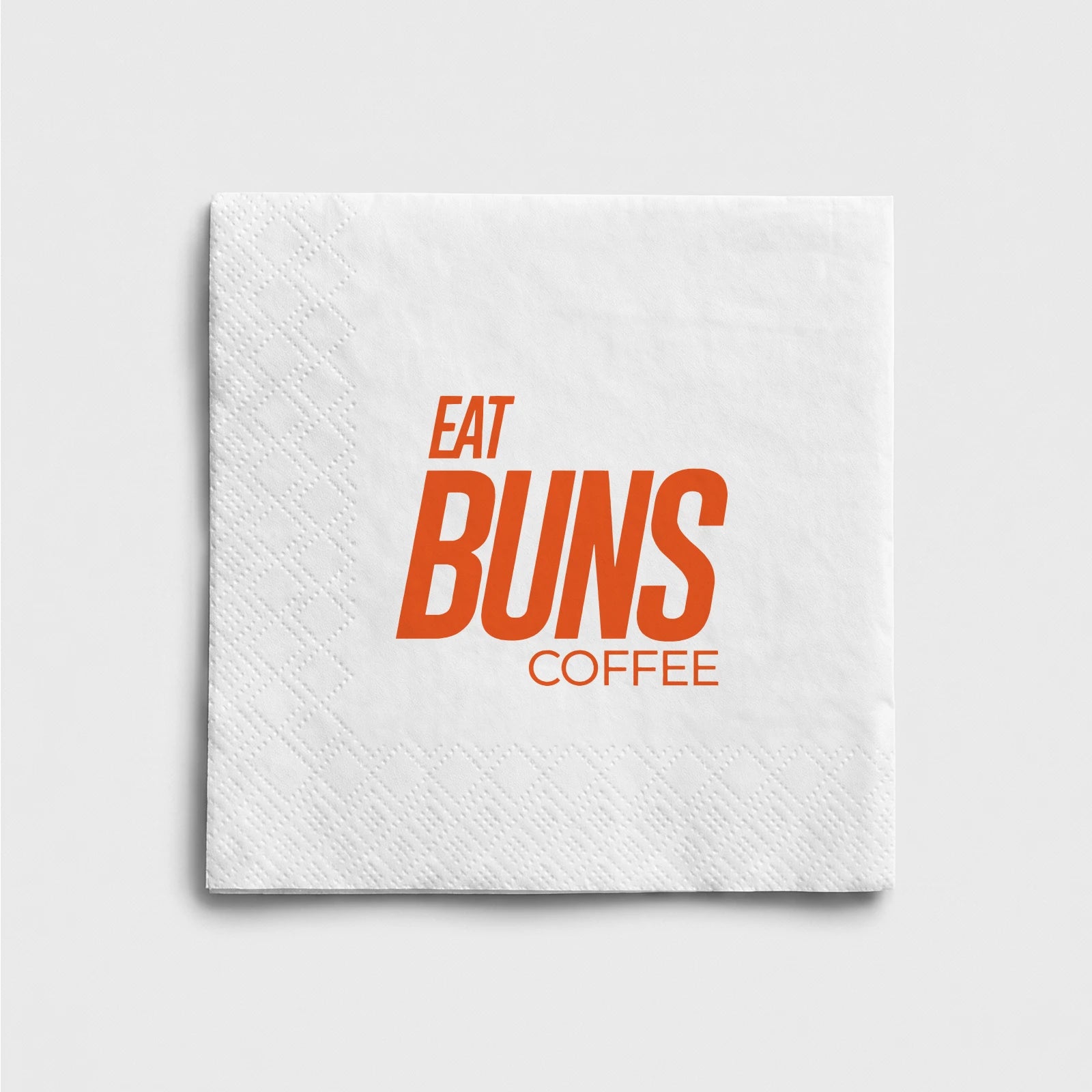
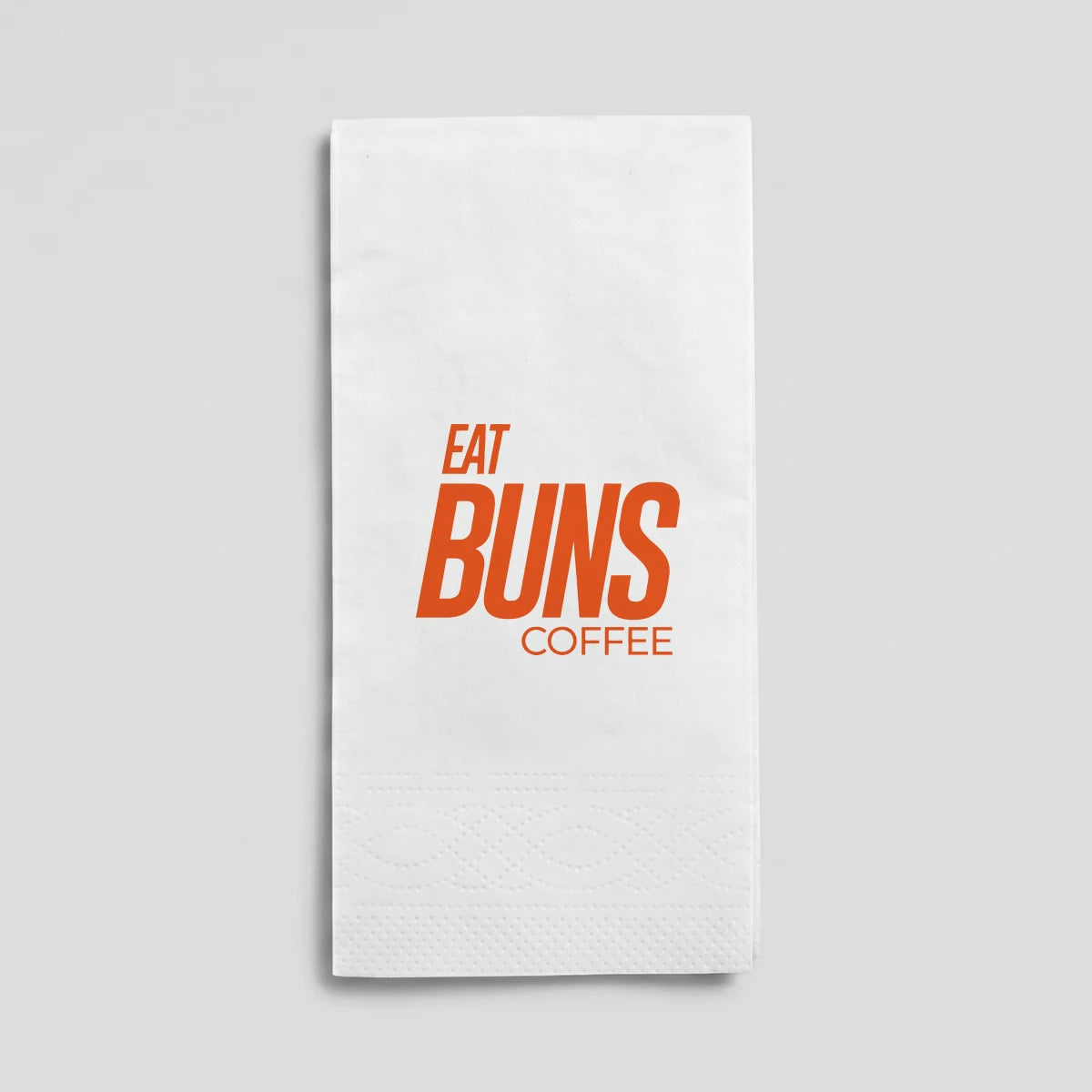
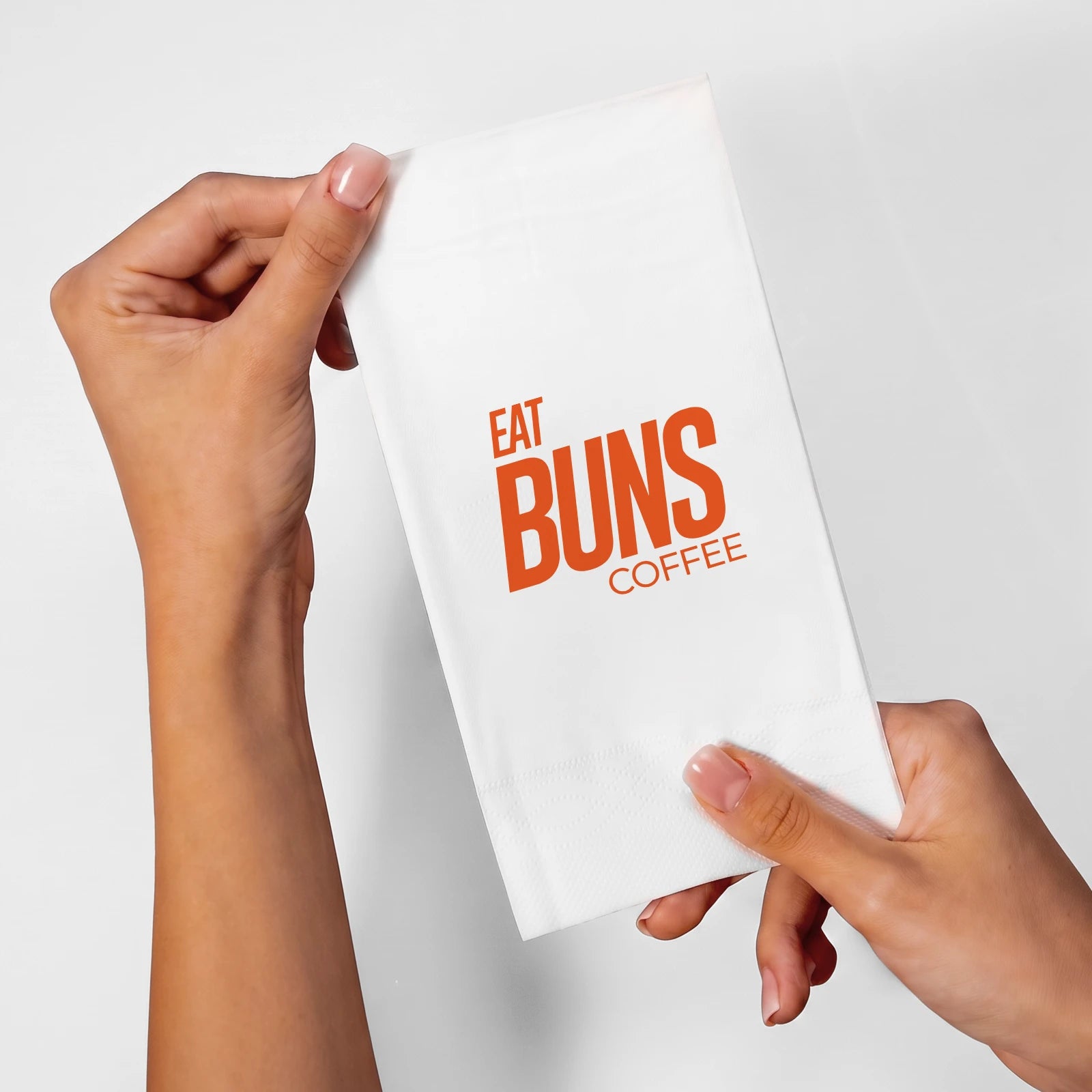
Custom printed napkins can provide practical service while extending branding across the order.
Custom printed wet wipes can be useful for burgers, sauces, kebab and other foods where customer convenience is especially relevant.
The aim is not to add unnecessary packaging. It is to create a logical sequence from food contact and containment through to presentation and transport.
Food Packaging for Single Restaurants, Chains & Growing Brands
A single-location restaurant and a multi-location food brand do not always need the same packaging strategy.
Single Restaurants & New Brands
Smaller businesses may benefit from starting with lower-MOQ products for the most visible packaging items before expanding into a wider branded range.
For example, a restaurant could begin with custom greaseproof paper or an Easy Assembly food box and add further packaging once usage becomes predictable.
Growing Restaurant Brands
As order volume increases, businesses can standardise:
- box sizes,
- paper colours,
- logo placement,
- takeaway bags,
- and complementary packaging.
Chains & Multi-Location Operations
Restaurant groups need packaging specifications that can be repeated consistently across locations. This makes standard product formats, artwork control and stock planning particularly important.
What Should You Check Before Ordering Custom Food Packaging?
Before ordering custom food packaging, start with the menu rather than the packaging catalogue.
- Food type: burger, pizza, kebab, sandwich, fries, dessert, bakery product or complete meal.
- Service model: dine-in, takeaway, collection, delivery, food court or event.
- Packaging format: decide between box, tray, wrapping paper, pouch, bag or specialist food packaging.
- Food dimensions: measure the real finished product and portion.
- Open or closed packaging: decide whether immediate access or enclosed transport is more important.
- White or Kraft: match material colour to artwork and brand identity.
- Printing: check the print method and colour options of the exact product.
- MOQ: minimum quantities vary significantly between product families.
- Delivery: production and express options vary by product.
- Sustainability: check recyclability, recycled content, compostability, PFAS-free options and other environmental attributes on the exact selected item.
- Operational workflow: consider storage, assembly and packing speed during busy periods.
- Related packaging: determine whether greaseproof paper, napkins, wipes or carrier bags are also required.
Custom food packaging works best when the entire packaging system is built around the actual menu, portion sizes and service process. By selecting the correct combination of boxes, trays, wraps, bags and complementary foodservice products, restaurants can create packaging that supports preparation and delivery while keeping their brand consistent from the kitchen to the customer.